
How To
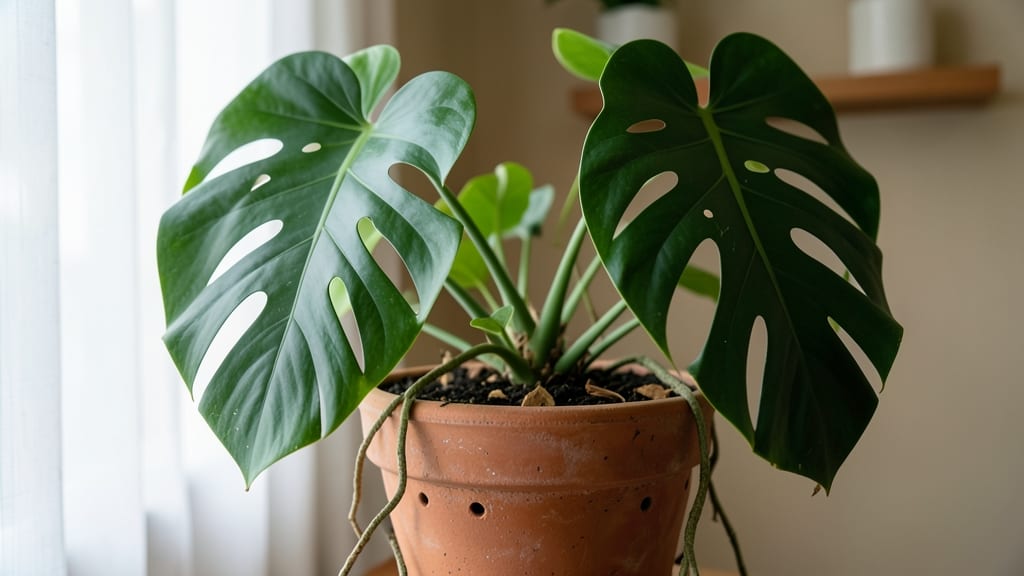
If your Monstera plant needs how much light to thrive, you’re in the right place—because brown spots, slow growth, or pale leaves usually mean it’s not getting the right balance. Monsteras thrive in bright indirect light, but too much direct sun or dim corners can stress them out.
The key is finding that sweet spot where your plant gets enough energy to grow lush, split leaves without burning.
In this guide, I’ll break down exactly how much light your Monstera needs, whether you’re placing it near a window, under artificial lights, or even outdoors in Zone 6a.
You’ll learn to spot the signs of over- or under-lighting and how to adjust care in 3 simple steps—so your Monstera can finally reach its full jungle potential.

Monstera light requirements: ideal brightness levels for healthy growth
Your monstera plant thrives on bright indirect light, mimicking the dappled sunlight of its jungle origins. Too little light slows growth, while too much causes leaf scorch—balancing this is key to those iconic split leaves and glossy foliage.
Most homes provide medium to low light, but monsteras adapt well with the right placement.
Start by placing your monstera near an east-facing window, where morning sun is gentle. North-facing windows work too, offering consistent bright indirect light without harsh afternoon rays. Avoid south or west windows unless you use sheer curtains to diffuse the intensity.
If your monstera’s leaves start yellowing or developing brown spots, it’s a clear sign of light stress. Rotate the pot quarter-turns weekly to ensure even growth and prevent lopsided exposure. This simple trick helps the plant develop uniformly and maximizes photosynthesis.
Indoor lighting varies by room—bathrooms and hallways often lack natural light, forcing you to supplement with grow lights. For low-light conditions, aim for 4-6 hours of artificial light daily using full-spectrum LEDs. Even in dim spaces, your monstera can survive, though growth will be slower.
Outdoor monsteras love partial shade under trees, where they receive filtered sunlight. If moving your plant outside, acclimate it gradually over 7-10 days to avoid shock. Sudden exposure to full sun can bleach leaves or cause sunburn, especially in hot climates.
Here’s how to visualize the perfect light setup for your monstera’s needs:
Notice how bright indirect light yields the most dramatic foliage? That’s because monsteras produce variegated leaves (the white splashes) only when they receive enough light to trigger chlorophyll production. In low-light conditions, your plant may revert to all-green leaves—a sign it’s struggling to photosynthesize efficiently.
For office or apartment dwellers, a south-facing window can work if you place your monstera 6-8 feet back from the glass. Use a light-colored curtain to scatter the rays and prevent leaf scorch.
Even in artificial lighting, position your plant 12-18 inches from the bulb to mimic natural light gradients.
Pro tip: Monitor your monstera’s growth rate as a light gauge. If new leaves appear every 2-3 months with healthy splits, you’ve nailed the light balance. Slower growth? It’s time to move closer to a brighter spot or invest in a grow light.
Outdoor monsteras in USDA Zone 6a can enjoy partial shade from late spring to early fall. In winter, bring potted plants indoors before temperatures drop below 50°F, as cold drafts stress the roots and stunt growth.
Remember, your monstera’s light needs evolve with its size. A mature plant with 6-foot vines can handle slightly lower light than a young cutting, but never sacrifice quality for quantity. Prioritize bright indirect light for that jungle-vibe foliage you love.
Monstera light requirements: ideal brightness levels for healthy growth
The Monstera deliciosa thrives in bright indirect light, mimicking its natural tropical habitat. Think of it as a plant that loves dappled sunlight—like the light filtering through a forest canopy.
Too much direct sun can scorch its leaves, while too little light slows growth and reduces those iconic split leaves.
For optimal growth, place your Monstera near an east or north-facing window, where it gets 4-6 hours of filtered sunlight daily. South-facing windows can work but may require a sheer curtain to diffuse harsh afternoon rays. If your home lacks natural light, don’t worry—we’ll cover artificial solutions later.
Key light requirements:
- Low light: Tolerated but results in slow growth and fewer splits
- Medium light: Ideal for healthy, steady growth
- High light: Risk of leaf burn if direct sun exceeds 2-3 hours
Monstera Light Needs Summary
| Light Level | Ideal Placement | Growth Impact |
|---|---|---|
| Low Light | North-facing window or 6+ feet from bright windows | Slow growth, fewer splits, leggy stems |
| Medium Light | East/west window or 2-3 feet from north window | Healthy growth, vibrant leaves, moderate splits |
| High Light | South window with sheer curtain or filtered outdoor shade | Risk of leaf burn, crispy edges if direct sun exceeds 2 hours |
Outdoors in Zone 6a, your Monstera can handle partial shade (morning sun + afternoon shade) during spring and fall. Avoid placing it in full sun—even tropical plants can get sunburned! If you’re growing yours outside, monitor leaves for signs of stress and adjust shade coverage as needed.
Rotate your plant quarter-turn weekly to ensure even light exposure. This prevents lopsided growth and helps all leaves get equal access to sunlight. If you notice new leaves growing smaller or losing their glossy sheen, it’s a sign your Monstera needs more light.
Pro tip: Use a light meter (or your phone’s lux app) to check light levels. Monsteras thrive in 10,000-20,000 lux of indirect light—think of it as the brightness of a cloudy day. If your reading is below 10,000 lux, supplement with artificial lighting.
Remember, every home’s light varies—test different spots for 2-3 weeks to find the perfect balance. Your Monstera will thank you with larger, healthier leaves and faster growth! 🌿