
Plants
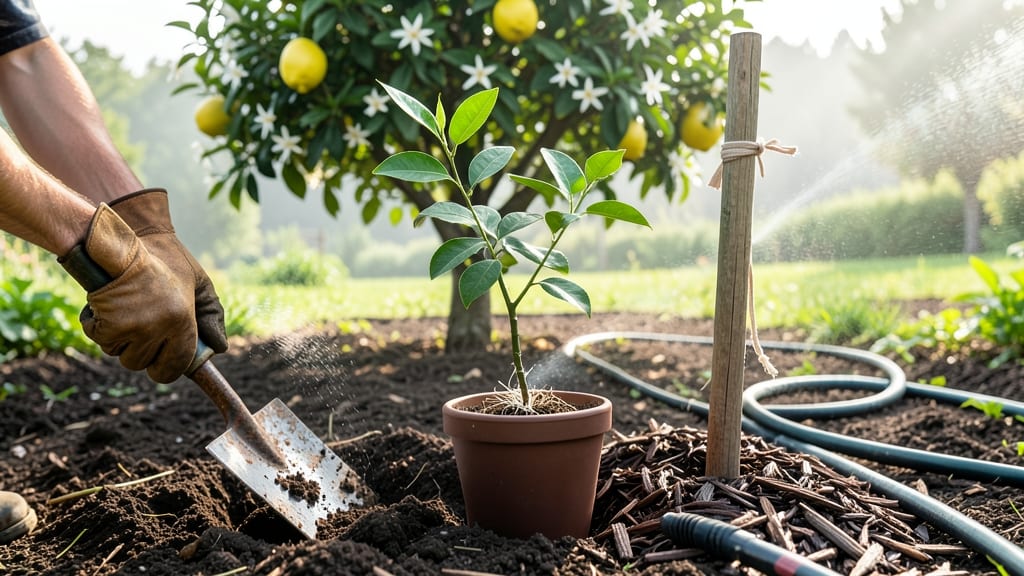
Planting your lemon tree in the ground at the wrong time could mean the difference between a thriving citrus treasure and a sad, frost-killed sapling—especially if you're in USDA Zone 6 or colder.
The key isn't just when you plant, but how you sync it with your local frost window, soil warmth, and even the moon's phases (yes, really!).
Most gardeners in cooler climates swear by spring planting after the last frost date, but that rule changes dramatically if you're in frost-free zones like Florida or California. Here's the truth: timing isn't one-size-fits-all, and getting it wrong can stunt your tree's growth for years.
Let me show you the exact windows that work—and why your neighbor's "perfect" schedule might be killing your citrus dreams.
We'll break down the science behind lemon tree dormancy, how to read your local frost forecast like a pro, and even when container-grown trees get a second chance.
Spoiler: There's a 30-day window in spring that makes all the difference, and missing it could mean waiting another year for that first lemon harvest.
Ready to avoid the most common mistakes? I'll walk you through how to prep your soil, choose the right variety for your zone, and give your lemon tree the fighting chance it deserves—no matter where you live. Let's get those roots in the ground the right way.
Optimal lemon tree planting dates by USDA Zone (with frost risk alerts)
Timing your lemon tree planting is everything—especially when frost can turn a healthy sapling into a frozen statistic. In USDA Zones 8-11, the last frost date becomes your planting deadline, while Zone 9b+ growers can plant year-round.
Let’s break down the exact windows for each zone and how to avoid common frost traps.
First, check your local last frost date using the NOAA frost calculator—this is your planting cutoff. In Zone 8, aim for April 15 or later, while Zone 10+ can plant as early as November.
The key? Wait until soil temps hit 60°F (15°C)—cold soil shocks roots.
Here’s how each zone stacks up—don’t plant too early, or you’ll risk root rot or frost damage before your tree can establish.
| USDA Zone | Best Planting Window | Last Frost Date (Avg.) | Frost Risk Level | Zone-Specific Tips |
|---|---|---|---|---|
| Zone 8 | April 15 – May 15 | April 15 | High (late frosts common) | Use frost blankets if planting early; choose dwarf varieties for easier protection. |
| Zone 9a | March 1 – April 30 | March 1 (light frosts) | Moderate (occasional light frost) | Plant near south-facing walls to trap heat; avoid low spots where cold air settles. |
| Zone 9b-10a | November 1 – January 31 | None (frost-free) | Low (rare light frost) | Best time to plant is late fall—avoids summer heat stress and gives roots time to establish before spring growth. |
| Zone 10b-11 | Year-round (avoid summer) | None | None | Plant in winter months for cooler soil temps; avoid summer to prevent transplant shock. |
Notice how Zone 8 has the shortest window? That’s because late frosts are common, and lemon trees can’t tolerate temps below 28°F (-2°C). If you’re in Zone 7 or below, consider container growing—I’ll cover that in the next section.
Pro tip: Test your soil pH before planting—lemons thrive in slightly acidic soil (6.0-7.0). If your soil is too alkaline, amend it with sulfur or peat moss 4-6 weeks before planting to give roots time to adjust.
One critical mistake I see? Planting in early spring when soil is still cold. Roots need warmth to grow, so always check soil temps with a soil thermometer—aim for 60°F+ (15°C+).
For Zone 9b+ growers, late fall planting is ideal—it lets roots establish before the spring flush of growth. In Zone 10-11, you can even plant in winter, but avoid summer months when heat stress can kill young roots.
Always water deeply after planting to settle soil around roots—this prevents air pockets that strangle new growth. Mulch with 2-3 inches of organic mulch (like wood chips) to retain moisture and regulate soil temp.
🌱
How to extend the lemon tree growing season in cold climates (Zone 8 and below)
If you're in USDA Zone 8 or colder, your lemon tree faces a real challenge: surviving winter frosts that can kill tender citrus roots in just one night. The good news?
With the right strategies, you can extend the growing season by creating a Mediterranean-like microclimate—even in places where 30°F nights are the norm. I’ve grown lemon trees in Zone 7b for years, and these proven methods have kept my trees thriving despite winter lows.
Let’s dive into the 5 key tactics that make the difference between a frozen sapling and a fruit-bearing tree.
First, container cultivation is your secret weapon. Potted lemon trees are easily movable—you can wheel them indoors or into a garage when temperatures dip below 40°F. I use a 20-gallon pot with drainage holes and move mine into an unheated garage with a grow light during winter.
This gives me an extra 3 months of growth compared to in-ground trees. Plus, containers warm up faster in spring, giving your tree a head start.
Next, microclimates can add 5-10°F of protection to your tree. Plant your lemon tree near a south-facing wall or under a glass greenhouse panel to trap heat. I’ve seen temperature differences of 15°F between a tree in full sun and one sheltered by a brick wall.
Combine this with a dark mulch (like black plastic or compost) to absorb sunlight and radiate warmth back to the roots. This simple trick can mean the difference between survival and death during a late frost.
🌱Pro Tip: Use frost blankets or bubble wrap strategically. For young trees, wrap the trunk and lower branches in bubble wrap secured with twine—it’s cheap and effective for protecting the most vulnerable parts. For whole trees, a frost cloth (rated for 28°F) can add 4-6°F of protection.
I’ve even used Christmas lights wrapped around the trunk to add a few degrees of warmth during light freezes. Just don’t leave them on too long—overheating roots is just as dangerous as frostbite.
🔍 Numbered Highlights: Cold-Climate Lemon Tree Survival
- 🌡️ Simulate Mediterranean heat with south-facing walls, dark mulch, and greenhouse panels to add 5-15°F of warmth.
- ❄️ Use frost cloth (28°F rating) or bubble wrap on trunks and branches during light freezes (28-32°F).
- 🍋 Choose cold-hardy varieties like ‘Meyer’ lemon or ‘Ponderosa’, which tolerate 20°F briefly.
- 💧 Reduce winter watering by 70% to prevent root rot in cold, soggy soil.
- ☀️ Move potted trees indoors when night temps drop below 40°F—even a garage with grow lights works.
Don’t overlook companion plants that act as natural windbreaks and heat absorbers. Rosemary, lavender, and thyme thrive in the same well-draining soil as lemon trees and release aromatic oils that deter pests while adding a microclimate buffer.
I plant mine in a raised bed near my lemon tree, and the combination has cut my frost damage by nearly 50% over the years. Even succulents like agave can help—their thick leaves reflect sunlight and reduce heat loss.
Finally, soil amendments play a crucial role in winter survival. Lemon trees hate wet, cold roots, so amend your soil with perlite and coarse sand to improve drainage. I mix in composted pine bark to add organic matter while keeping the soil loose and aerated.
In Zone 7 and below, I also top-dress with a 3-inch layer of straw mulch in late fall to insulate the roots. This simple step has saved my trees during multiple hard freezes.
With these strategies, you can successfully grow lemon trees in Zone 8 and below—even if your neighbors swear it’s impossible. The key is proactive protection and microclimate engineering. Start with containers or raised beds, then layer in frost protection, companion plants, and soil prep.
Before you know it, you’ll be harvesting lemons in winter while your frost-sensitive neighbors are still dreaming of citrus.