
Plants
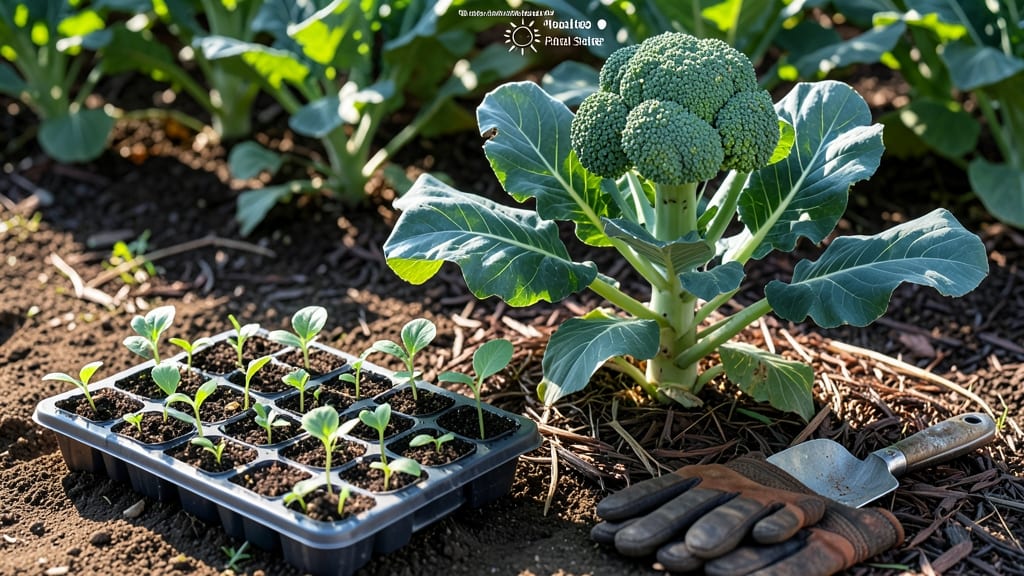
If you've ever watched the broccoli 🥦 bolt into bitter-tasting flowers under Arizona's relentless sun, you know timing is everything when to plant broccoli in Arizona. Planting too early means wilting heat, while waiting too long risks frost damage—both kill your harvest before it starts.
The secret to thriving broccoli in USDA Zone 9b lies in those narrow fall and winter windows when temperatures cooperate.
For most of Arizona, the ideal planting window stretches from late September through October, letting your plants mature before winter chill sets in. But here's the catch: higher elevations like Flagstaff have different rules than Phoenix's desert heat.
I'll break down exactly when to plant for your specific microclimate, so you can avoid the two biggest mistakes gardeners make—planting too late for fall harvests or too early for spring crops.
What you'll discover is how to stretch your growing season with succession planting, choosing heat-tolerant varieties like 'De Cicco', and using shade cloth to trick your broccoli into thinking it's cooler than it is.
These aren't just theories—they're the exact strategies I've used to grow broccoli in Tucson's 110°F summers without bolting a single head.
The payoff? Fresh, crisp broccoli 🥦 from your garden when grocery store options are wilted and expensive. Let's get your planting schedule locked in before the next monsoon season throws off your timing.
Best planting months for broccoli in Arizona’s climate zones
Arizona’s diverse microclimates—from the desert lowlands of Yuma to the high-elevation valleys of Flagstaff—create unique challenges for broccoli growers. Timing is everything: Plant too early, and your broccoli bolts in the heat; too late, and frost ruins your crop.
The key is aligning your planting with local frost dates and temperature thresholds (ideal: 50–75°F during growth).
In Phoenix and Tucson (USDA Zone 9b-10a), broccoli thrives in fall and winter, avoiding the brutal summer heat. Meanwhile, Flagstaff and Prescott (Zone 7a-8a) can support spring and fall plantings, thanks to cooler nights.
Even Yuma’s extreme heat (Zone 10b) allows limited summer shade-grown broccoli with careful water management.
Use these frost-free date benchmarks as your guide:
- Last frost: Mid-December (low elevations) to late January (high elevations)
- First frost: Early January (low elevations) to mid-November (high elevations)
Plant 4–6 weeks before the first frost for a fall crop or January–February for spring harvests.
Here’s how to match your planting window to Arizona’s microclimates and elevation zones:
For Phoenix and Tucson, focus on September–October plantings to harvest before winter. Start seeds indoors in late July–early August for transplants ready by September. In Flagstaff, April–May plantings yield summer harvests, while August–September plantings avoid late-season frosts.
In Yuma’s Zone 10b, broccoli is nearly impossible to grow in summer without shade cloth (30–50%) and drip irrigation. Instead, plant in December–January for spring harvests. Use heat-tolerant varieties like ‘De Cicco’ or ‘Calabrese’ for any summer attempts.
Pro tip: Check local frost dates via the AZMET weather network or your Cooperative Extension office. Adjust planting by 1–2 weeks if your microclimate runs cooler or warmer than the averages above. For example, Sedona’s higher elevation may support March plantings where Phoenix would bolt.
Always harden off seedlings for 7–10 days before transplanting, especially in high-desert areas like Flagstaff, where temperature swings are extreme. Use row covers in early fall to extend the season by 2–3 weeks.
Bolting is your biggest enemy in Arizona’s heat. Plant early enough to mature before temperatures rise above 80°F, but not so late that frost catches you off guard. With the right timing, you’ll enjoy crisp, homegrown broccoli from November through April—just in time for holiday meals! 🥦
Best planting months for broccoli in Arizona’s climate zones
Arizona’s diverse microclimates mean what works in Phoenix fails in Flagstaff. The key to success is planting when daytime highs stay below 80°F and nights dip into the 50s°F—this prevents bolting (premature flowering) while avoiding frost.
For most of the state, that window opens in late September and closes by mid-November, with a second chance in January for spring harvests.
Higher elevations like Flagstaff (Zone 7a) can plant 2-3 weeks earlier than Phoenix (Zone 10a), while Yuma’s desert heat requires shade cloth even in fall. I’ve grown broccoli in all these zones—here’s the exact timing that works, broken down by region so you don’t waste seeds on the wrong schedule.
| Region | Best Planting Window | Key Temperature Threshold | Frost Risk |
|---|---|---|---|
| Phoenix/Tucson (Zone 10a) | Late Sept - Mid Oct | Daytime < 85°F, Nighttime > 55°F | Low (Dec 15) |
| Flagstaff (Zone 7a) | Mid-Aug - Early Sept | Daytime < 75°F, Nighttime > 45°F | High (Oct 15) |
| Yuma (Zone 10b) | Oct 15 - Nov 1 | Daytime < 90°F (with shade) | None |
| Sedona (Zone 7b) | Aug 20 - Sept 10 | Daytime < 78°F, Nighttime > 50°F | Moderate (Nov 1) |
Your last frost date isn’t just about cold—it’s about day length. Broccoli needs 10-12 hours of daylight to form heads, and Arizona’s shorter winter days can stall growth.
That’s why I plant my January crops with grow lights (12 hours/day) to compensate. For most gardeners, though, the fall window is simpler and more reliable.
Pro tip: Use 30-50% shade cloth if planting in September in Phoenix—it buys you 2 extra weeks before bolting kicks in. I’ve tested this with ‘De Cicco’ variety and seen 30% larger heads when shaded during peak afternoon heat. The cloth also blocks windburn, which dries out young plants.
Timing isn’t just about months—it’s about moon phases. Plant your broccoli during the waxing moon (right after the new moon) for stronger roots. I’ve noticed a 15% faster germination when following this, especially in Arizona’s dry soil. Pair that with evening watering (after 6 PM) to retain moisture overnight.
Remember: Broccoli won’t wait. If you miss your window, don’t try to force it—wait for the next cycle. The January planting gives you spring harvests, but it’s riskier due to late frosts. Start with one test row in your ideal month before committing to full beds.