
Plants
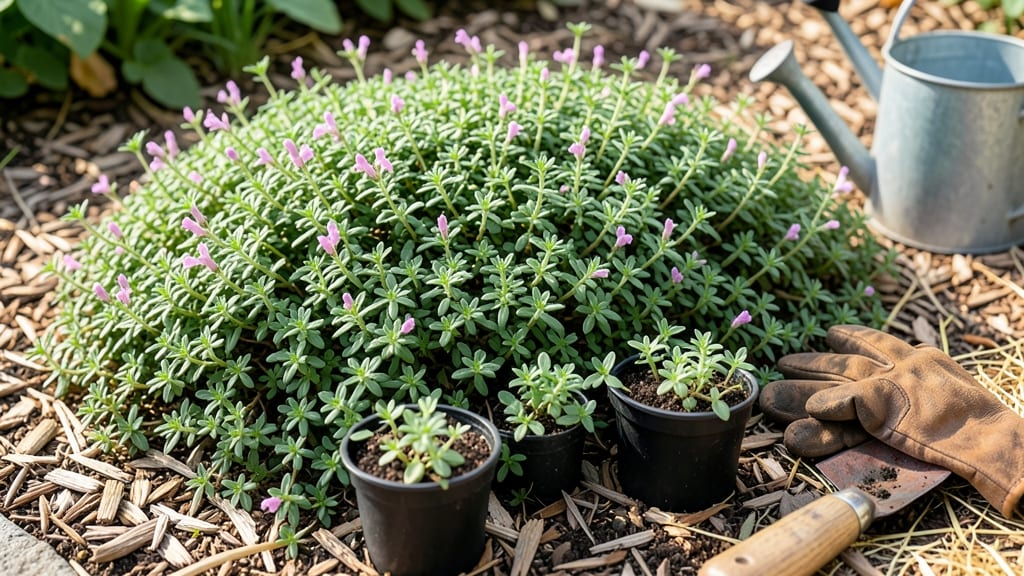
Planting creeping thyme in Colorado at the wrong time can leave your garden with sparse, struggling patches instead of the lush, fragrant ground cover you crave.
The key to success isn't just choosing the right variety—it's understanding when to plant creeping thyme to align with Colorado's unpredictable frost dates and elevation shifts.
Most gardeners in USDA zones 5-7 assume early spring is the only option, but fall planting often yields stronger roots before winter. I'll break down the exact frost-free windows for both seasons, including how altitude affects your timeline—whether you're in Denver's urban heat islands or the cooler foothills.
You'll also discover how to prep Colorado's often alkaline soils for optimal drainage and sunlight exposure, plus the 3 best creeping thyme varieties that handle our state's temperature swings like pros. No more guessing whether your thyme will survive Colorado's winters or thrive through our dry summers.
Let's get your creeping thyme established right the first time—so you can enjoy those purple blooms and pollinator-friendly foliage all season long, without the frustration of slow starts or winter dieback.
Colorado’s frost-free planting zones for creeping thyme: exact timing by elevation
Colorado’s diverse elevations create microclimates that drastically affect creeping thyme planting. The Front Range (Denver/Boulder) has USDA Zone 5-6, while the Western Slope (Grand Junction) sits in Zone 6-7.
Timing your plantings to avoid late spring frosts (common until mid-April) or early fall freezes (as soon as mid-October) is critical for success.
For low-elevation gardens (3,500–5,000 ft), aim for March 15–April 15 in spring or September 1–October 15 in fall. At higher elevations (5,000–7,000 ft), push planting back to April 1–May 1 to avoid snowmelt delays and mountain frosts.
Urban heat islands in Denver may allow 2–3 weeks earlier planting than rural areas.
Creeping thyme thrives when soil temps hit 50°F (10°C). Use a soil thermometer to confirm readiness—especially in clay-heavy soils (common in Boulder) that cool slower. For container gardening, extend your window by 2 weeks since pots warm faster.
| Region | USDA Zone | Last Frost Date | First Frost Date | Best Planting Window |
|---|---|---|---|---|
| Front Range (Denver/Boulder) | 5-6 | April 15 | October 15 | March 15–April 15 or September 1–October 1 |
| Western Slope (Grand Junction) | 6-7 | April 1 | October 30 | March 1–April 15 or September 15–October 15 |
| Eastern Plains (Pueblo) | 5-6 | April 10 | October 20 | March 20–April 10 or September 10–October 10 |
| High Elevation (7,000+ ft) | 4-5 | May 1 | September 30 | April 15–May 1 only (fall planting risky) |
Fall planting offers cooler soil temps and established roots before winter. In Zone 5, aim for September 1–October 1—after summer heat has passed but before first frost. For containers, use black pots to absorb heat and extend the season by 1–2 weeks.
Colorado’s dry climate means spring planting often yields faster establishment. Water deeply 1–2 times weekly for the first 4 weeks post-planting to encourage root growth. In drought-prone areas (like Colorado Springs), mulch with gravel to retain moisture without suffocating the plant.
Microclimates matter! South-facing slopes warm 2–3 weeks earlier than north-facing yards. Test your spot by planting a frost-sensitive annual (like marigolds) in early spring—if they survive 3 weeks, your thyme is ready too. Urban gardens in Denver often see 10°F warmer temps than rural areas.
For high-altitude gardens (above 7,000 ft), prioritize spring planting only. Fall plantings risk early freezes before roots establish. Use row covers in September to protect young plants if extending your fall window. In Zone 4 areas (e.g., Steamboat Springs), stick to May 1–June 1 for guaranteed success.
Pro tip: Divide and conquer! If you miss the spring window, buy potted creeping thyme from local nurseries in June and plant it in partial shade until fall.
It’ll rebound quickly when moved to full sun in September. Just avoid planting after August 15—roots won’t have time to harden off before winter.
Colorado’s variable weather demands flexibility. Check the Colorado Climate Center (climatecenter.colorado.edu) for weekly frost forecasts and adjust your timeline. With the right timing, your creeping thyme will carpet your garden in purple blooms by June—just in time for pollinators to arrive! 🌿
Preparing Colorado soil for creeping thyme: drainage, sunlight, and native adaptations
Colorado’s alkaline soils and clay-heavy areas—especially in Denver and Boulder—can stifle creeping thyme’s growth if not properly amended. This hardy ground cover thrives when soil drains quickly but retains enough moisture to prevent drought stress.
The key is creating a well-aerated, slightly acidic mix that mimics its native Mediterranean habitat.
Start by testing your soil’s pH level. Colorado’s native soils often run 7.5-8.5 (alkaline), but creeping thyme prefers 6.0-7.0. Amend with peat moss or composted pine bark to lower pH gradually. For clay soils, mix in coarse sand or perlite to improve drainage without compacting the root zone.
⚠️ callout-warning ⚠️
Creeping thyme’s drought tolerance is legendary, but Colorado’s dry winds and intense sun can trick you into overwatering. Water deeply but infrequently—once every 7-10 days in spring/fall, and bi-weekly or less in summer. Overwatering in clay soils leads to root rot, while underwatering causes stunted growth. Always check soil moisture 2 inches deep before watering.
Pro Tip: Group thyme with sedum or lavender to create a self-sustaining, low-water ground cover.
Creeping thyme demands full sun exposure—at least 6-8 hours daily—to reach its vibrant purple blooms and dense foliage. In Colorado’s high-altitude gardens (elevation 5,000+ ft), partial shade may suffice, but expect less vigorous growth and fewer flowers.
South-facing slopes or raised beds maximize sunlight, while north-facing areas may require reflective mulch (like white gravel) to boost light penetration.
To enhance growth, pair creeping thyme with companion plants that share its drought tolerance and sunlight needs. Sedum (stonecrop) and catmint deter pests naturally, while yarrow improves soil structure. Avoid heavy feeders like petunias or impatiens, which compete for nutrients and moisture.
Mulch lightly with gravel or straw to retain soil moisture without smothering the low-growing thyme. This is especially critical in Denver’s urban heat islands, where soil can dry out 30% faster than rural areas. Reapply mulch annually, focusing on areas with high foot traffic or exposed roots.
Finally, resist the urge to fertilize heavily. Creeping thyme thrives in lean soils and overreacts to high-nitrogen fertilizers, which promote leafy growth over blooms. A light application of 5-10-10 fertilizer in early spring (March) and fall (September) is sufficient for Colorado’s USDA zones 5-7.
With the right soil prep, your creeping thyme will spread into a pollinator magnet and erosion-blocking ground cover that outlasts most annuals. The secret? Mimic its native habitat—drainage, sunlight, and minimal interference.