
Plants
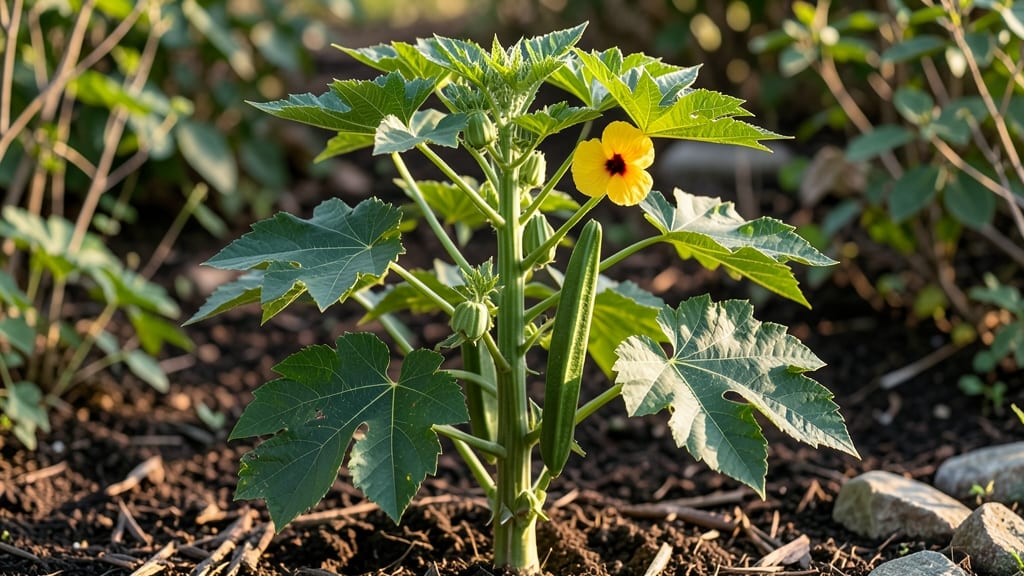
If you're wondering how tall does an okra plant grow, here's the truth: some varieties shoot up like skyscrapers, while others stay as tidy as a kitchen countertop.
That 🌱 okra you plant in Zone 6a after last frost could easily reach 10 feet if left unchecked—or stay compact enough for container gardening with the right choices.
But here's what most gardeners don't realize: your okra's height isn't just about luck. It's a mix of genetics, sunlight, and how you care for it. That towering 'Clemson Spineless' you love might need staking, while 'Emerald' stays neatly under 4 feet without any fuss.
Knowing these differences could mean the difference between a harvest that fills your kitchen or one that sprawls into your neighbor's yard.
What I'll show you next are the exact height ranges for popular varieties, plus the hidden factors that can make your plants grow taller or shorter than expected.
Whether you're working with limited space or dreaming of a lush vertical garden, this is how you get the perfect size for your needs.
Ready to stop guessing and start planning? Let's break down which varieties stay small, which reach for the sky, and how to control their growth like a pro—so you can enjoy fresh okra without the overgrowth headaches.


Okra plant height by variety: small, medium, and giant growers
Okra plants are famous for their rapid vertical growth, but their mature height varies dramatically by variety. Some tower like tall trees, while others stay compact enough for container gardening.
Choosing the right type for your space ensures both optimal harvests and easy maintenance. Let’s break down the height ranges of popular okra varieties to help you plan your garden layout.
Most okra varieties fall into three height categories: dwarf (3–5 ft), semi-dwarf (5–7 ft), and standard (6–10 ft). Dwarf types like ‘Emerald’ are perfect for small gardens or urban balconies, while standard varieties like ‘Clemson Spineless’ dominate backyard plots.
Understanding these differences helps you avoid overcrowding and maximize yield.
Here’s how to visualize okra’s growth potential. A standard okra plant often reaches the height of a 6-foot-tall adult, while dwarf varieties stay around knee-high (3–4 ft). This comparison is key when deciding where to plant—near fences, in raised beds, or even in large containers.
| Variety | Height Range | Best For | Spacing |
|---|---|---|---|
| Emerald | 3–5 ft | Containers, small gardens | 18–24" |
| Red Burgundy | 4–6 ft | Small plots, trellises | 24–30" |
| Clemson Spineless | 6–10 ft | Large gardens, field planting | 36–48" |
| Arkansas Little Light | 3–4 ft | Containers, urban gardens | 12–18" |
| Jinbu | 5–7 ft | Medium gardens, trellises | 24–30" |
When selecting okra varieties, consider your garden’s available space and growth goals. Dwarf varieties like ‘Emerald’ or ‘Arkansas Little Light’ are ideal for container gardening or small urban plots, while taller types like ‘Clemson Spineless’ thrive in open-field settings.
Always check seed packets for mature height estimates—they’re your best guide for spacing and support needs.
Proper spacing is critical for okra’s growth. Plant dwarf varieties 18–24 inches apart to prevent overcrowding, while tall types need 36–48 inches to avoid competition for sunlight and nutrients.
Overcrowding can stunt growth, reduce pod production, and increase pest and disease risks. Use stakes or trellises for taller varieties to support their heavy foliage and prevent toppling.
If you’re growing okra in containers, choose dwarf or semi-dwarf varieties. A 5-gallon pot can comfortably house a 3–5 ft plant, while larger containers (10+ gallons) accommodate taller types.
Ensure containers have drainage holes to prevent root rot, a common issue with okra’s thirsty roots. Mulch around the base to retain moisture and regulate soil temperature.
For maximum yield, prioritize varieties that match your climate. In hot, humid regions, taller varieties like ‘Clemson Spineless’ thrive, while cooler climates benefit from shorter, hardier types like ‘Red Burgundy’.
Always adapt your choice to your local growing zone—okra struggles in short-season areas unless you opt for early-maturing dwarf varieties.
Remember, okra’s height isn’t set in stone—care and conditions play a huge role in its final stature. With the right variety and proper growing techniques, you can coax even dwarf okra to reach its potential or keep towering types in check.
Next, we’ll explore how sunlight, water, and pruning influence okra’s growth beyond genetics.
Factors that determine okra plant height beyond genetics
Your okra’s height isn’t set in stone—it’s a dynamic response to its environment. While genetics give you a baseline, factors like sunlight exposure, soil fertility, and watering habits can push those 6-10 foot varieties even taller or keep dwarf types from reaching their potential.
Think of it like a plant version of a growth spurt: the right conditions can turn a 5-foot variety into a 9-footer in a single season.
For example, my 'Clemson Spineless' okra plants in Zone 6a hit 8 feet last summer, but the same seeds in a container with limited sunlight barely cleared 4 feet.
That’s not just luck—it’s how your okra reads its surroundings. Let’s break down the key factors that turn your okra into a sky-scraper or a compact bush.
🌱 Key Factors Affecting Okra Height
- Sunlight: 6+ hours/day = taller growth; 4-5 hours = stunted
- Soil nutrients: Nitrogen boosts height; phosphorus promotes root depth
- Watering: Deep, infrequent watering = stronger stems; shallow, frequent = leggy growth
- Pruning: Pinching tips reduces height; no pruning = natural sprawl
- Climate: Hot, humid = faster vertical growth; cool = slower development
Sunlight is the MVP of okra height control. These plants are sun-worshippers, and when they get 6-8+ hours of direct sunlight daily, they’ll stretch toward the sky like they’re reaching for a cloud.
But here’s the catch: too much intense sun without proper water can lead to overgrowth and weak stems. I’ve seen 'Red Burgundy' okra hit 9 feet in full sun, but the same plants in partial shade stayed under 5 feet—and produced fewer pods.
Soil nutrients play a sneaky role too. Okra loves well-draining, fertile soil, but too much nitrogen can send your plants into a height frenzy while starving their roots. That’s why I always use a balanced 10-10-10 fertilizer—just 1 tablespoon per plant every 4-6 weeks during the growing season.
Over-fertilizing is a fast track to tall, leggy plants with fewer harvests.
Watering habits can make or break your okra’s height. Deep, infrequent watering (like 1-2 inches every 3-5 days) encourages strong stems, while shallow, frequent watering leads to weak, sprawling growth.
Pro tip: water in the morning to let foliage dry quickly—this prevents fungal issues that can stress plants and stunt growth. I once had a batch of okra that barely grew because I was watering at night, and the damp leaves invited powdery mildew.
Finally, don’t underestimate the power of pruning. If you want to control height, pinch off the top buds when plants are 12-18 inches tall. This encourages bushier growth and shorter stature.
I’ve used this trick with 'Emerald' okra to keep it under 4 feet in containers—perfect for balconies! Just avoid pruning too late in the season, or you’ll sacrifice pod production.