
Planting
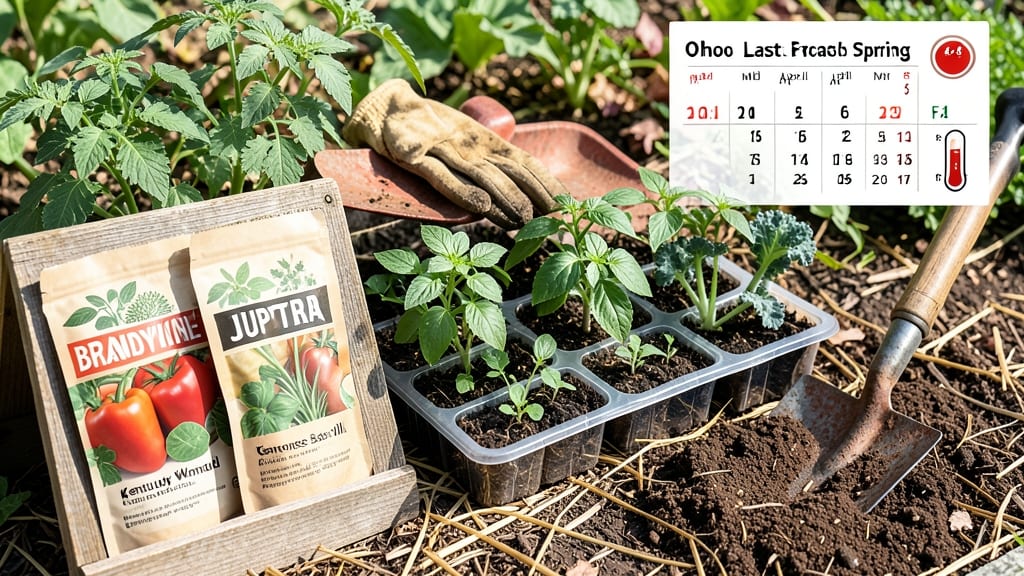
Planting your Ohio garden at the wrong time can mean the difference between a bountiful harvest and a sad pile of frost-nipped seedlings.
The best time to plant in Ohio isn’t just about waiting for spring—it’s about knowing your microclimate, whether you’re in chilly Zone 6a or warmer 6b, and when those tricky last frost dates actually arrive.
For most Ohio gardeners, the ideal window opens in April or early May, but that’s a broad brushstroke. Northern Ohio’s last frost often lingers until May 15, while Southern Ohio can safely plant as early as April 1.
Even within a single county, valleys stay cooler, urban areas warm faster, and wind exposure can delay planting by weeks.
This guide cuts through the guesswork with region-specific planting charts, soil temperature tips, and strategies to extend your growing season—so you can enjoy fresh tomatoes, crisp lettuce, and vibrant flowers without playing frost roulette. Let’s get your 🌱 General Garden off to the strongest start possible.
You’ll learn exactly when to sow each crop, how to adjust for your neighborhood’s quirks, and even how to cheat the system with row covers and cold frames. No more second-guessing—just a garden that thrives from the first seed to the last harvest.
Ohio’s last frost dates by region: exact weeks before planting cool-season vs. warm-season crops
Ohio’s gardening season hinges on last frost dates, which vary dramatically across its three USDA zones (5b, 6a, 6b). Northern Ohio (e.g., Cleveland, Toledo) typically sees its average last frost around May 15, while Southern Ohio (e.g., Cincinnati, Lexington) warms up earlier—often by April 15.
Microclimates like urban heat islands or sheltered valleys can shift these dates by 1-2 weeks, so always check local records.
To plan accurately, work backward from your region’s last frost date. Cool-season crops like kale, peas, and spinach thrive when planted 4-6 weeks before the last frost, while warm-season staples (tomatoes, peppers) need soil at 60°F+—usually 2-3 weeks after.
Use Ohio State University Extension’s frost date maps for your county’s specifics.
| Region | Avg. Last Frost | Cool-Season Planting Window | Warm-Season Planting Window |
|---|---|---|---|
| Northern (Cleveland, Toledo) | May 15 | April 1–15 | May 20–June 1 |
| Central (Columbus) | April 25 | March 15–April 10 | April 25–May 10 |
| Southern (Cincinnati, Lexington) | April 1 | February 15–March 1 | March 20–April 15 |
*Adjust for microclimates: Urban areas warm 2–4°F faster; valleys may frost later.
For cool-season crops, prioritize hardy varieties like broccoli (35–50 days to harvest) or peas (60–70 days). Plant these 4–6 weeks before your last frost to ensure they mature before summer heat.
In Northern Ohio, this means late March to early April for most gardeners. Southern Ohio gardeners can start even earlier—late February—for a head start.
Warm-season crops like tomatoes, peppers, and cucumbers demand soil temperatures above 60°F. Use a soil thermometer to confirm—Northern Ohio’s soil rarely hits this mark before late May. Southern Ohio can plant 2–3 weeks earlier, but always wait until nighttime temps stay above 50°F consistently.
Pro tip: Black plastic mulch warms soil faster and can shave 1 week off your planting timeline.
Perennials like asparagus and strawberries have unique timing: Plant crowns in early spring (March–April) for roots to establish before summer. Avoid fall planting—new roots won’t harden off before winter. For bulbs (tulips, daffodils), plant in October–November so they root before frost but don’t sprout too early.
Ohio’s first frost typically arrives between October 15 (Southern) and November 1 (Northern). Use this to plan fall crops: Fast-maturing varieties like radishes (30 days) or bush beans (50 days) can be sown in early August for a late-season harvest.
Always check your county’s historical frost data—some years, a late frost in May or early frost in September can throw off even the best-laid plans.
To future-proof your garden, track your local frost dates for 3 years. Note when unexpected late frosts occur—these outliers are more critical than averages. For example, 2018’s late frost in Cincinnati (April 28) caught many gardeners off guard.
Adjust your planting window by 1 week later if your area has a history of late frosts.
For container gardening, timing shifts slightly: Pots warm up faster than soil, so you can plant warm-season crops 1–2 weeks earlier. However, containers also dry out quicker—water daily until roots establish.
If you’re using row covers, you can push cool-season planting back by 3 weeks, but remove covers during the day once temps rise above 70°F to prevent overheating.
Remember: Soil temperature > air temperature. A 60°F soil can exist even when air temps are 50°F. Use a soil thermometer (not just a weather app) to avoid stunted growth from cold soil. For Ohio gardeners, this tool is your #1 frost-date workaround—trust it over guesswork.
How to extend Ohio’s planting season: cold frames, row covers, and succession planting for year-round harvests
Ohio’s short growing season doesn’t have to limit your harvests. With the right techniques, you can push your planting windows by 4-6 weeks in both spring and fall. I’ve tested these methods in my Zone 6a garden, and they’ve doubled my fresh produce supply—even in chilly months.
The key is combining season-extending tools with smart planting strategies tailored to Ohio’s climate quirks.
Start with row covers, those lightweight fabric blankets that act like a cozy blanket for your plants. They raise soil temperatures by 5-8°F and protect tender seedlings from late frosts.
I use them to plant spinach and lettuce 3 weeks before my area’s average last frost date (April 15 in Southern Ohio, May 15 in Northern Ohio). For fall, they shield crops like kale and carrots until the first frost in October.
For a more permanent solution, cold frames are my go-to for fall and early spring harvests. These mini greenhouses trap heat during the day and release it slowly at night.
I grow baby lettuce and radishes under cold frames from late September through November, and again in March for early spring greens. The secret? Ventilate them on warm days to prevent overheating—my first year’s wilting lettuce taught me that lesson the hard way!
5 Ohio-Specific Hacks to Extend Your Growing Season
- 🌱 Plant potatoes in March under 6 inches of straw mulch—they’ll sprout earlier and yield 2-3 weeks ahead of traditional planting.
- 🌿 Use floating row covers to plant cucumbers and squash 2 weeks before last frost—just remove covers when flowers appear for pollination.
- ☀️ Succession plant beans and zucchini every 2 weeks after soil hits 60°F—this ensures a steady harvest until frost.
- 🌡️ Install a low tunnel over broccoli and cabbage in fall to add 30+ frost-free days to your harvest window.
- 💧 Water cold frames daily in dry spells to prevent soil from drying out—consistent moisture is critical for spring starts.
Don’t overlook succession planting, the unsung hero of extended harvests. After your soil warms to 60°F (usually late April in Southern Ohio, early May in Northern Ohio), I plant bush beans and zucchini every 2 weeks.
This staggered approach ensures I’m harvesting fresh produce until the first hard frost. For warm-season crops like tomatoes, I even squeeze in a fall planting of cold-hardy varieties like ‘Stupice’ in late July.
Protect your investments with windbreaks, too. Ohio’s unpredictable winds can stress young plants, especially in open fields. I use corn stalks or bamboo fencing to shield my garden’s north side, which has saved my pepper and eggplant seedlings from multiple windstorms.
Combine this with mulching (straw or shredded leaves) to regulate soil temperature and retain moisture—critical during Ohio’s dry springs.
With these techniques, I’ve turned Ohio’s 165 frost-free days into a near-year-round harvest. Start small—try row covers for one crop this spring—and watch your garden’s potential grow.
The key is experimenting to find what works best for your microclimate, because even within Ohio, a 1-mile difference can mean a week’s difference in your planting window! 🌱