
Plants
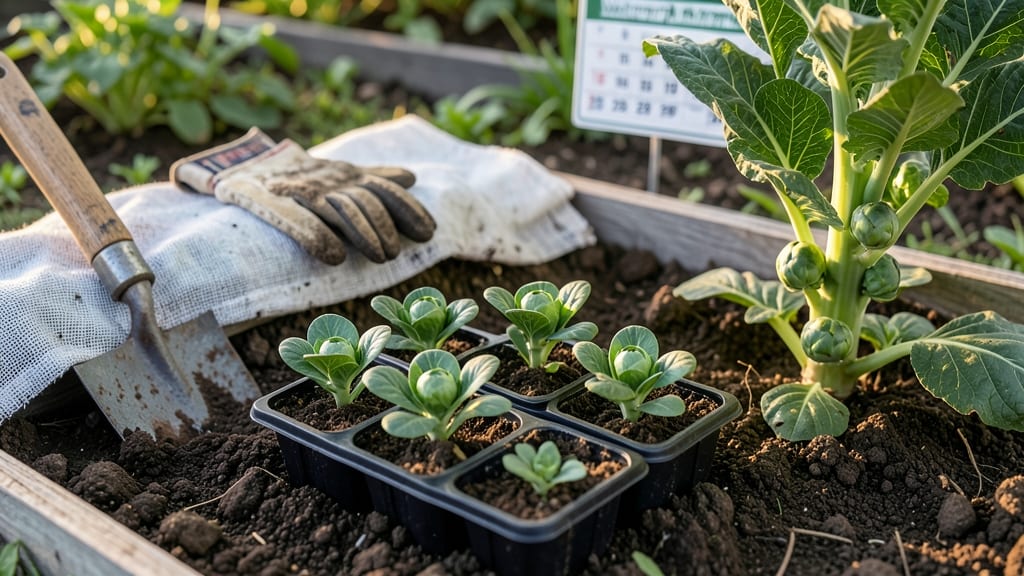
Planting Brussel sprouts 🥦 in Wisconsin isn’t just about timing—it’s about outsmarting the state’s fickle frosts and short growing season. Get the timing wrong, and you’ll end up with bitter, undersized sprouts or plants that bolt before they even mature.
The key? Knowing exactly when to plant for a fall harvest that thrives in Wisconsin’s 5a-6b zones, where crisp air sweetens the flavor.
Most gardeners in Wisconsin swear by two planting windows: mid-April to early June for spring starts and late July to early August for fall crops. But here’s the catch—your location matters. Northern Wisconsin’s cooler microclimates demand earlier starts, while southern areas can push the envelope a little later.
I’ll break down the exact frost-free windows and soil temperature thresholds you need to avoid common pitfalls.
Whether you’re using transplants or direct sowing, the right timing ensures your Brussel sprouts 🥦 develop those prized, frost-sweetened buds by October. You’ll also discover how to stretch your harvest window with cold-hardy varieties and simple tricks to protect your plants from Wisconsin’s early frosts.
Ready to grow a bumper crop? Let’s dive into the details.
By the end, you’ll have a clear planting calendar tailored to your Wisconsin zone, plus tips on adjusting for unpredictable weather. No more guesswork—just a reliable harvest of those delicious, garden-fresh sprouts you’ve been dreaming of. Let’s get those seeds in the ground at the perfect moment!
Wisconsin’s ideal planting timeline for brussel sprouts by variety
Wisconsin’s cool climate makes it perfect for growing brussel sprouts, but timing your plantings is critical. The state’s USDA Zones 5a-6b offer two ideal windows: spring and fall. Plant too early, and you risk bolting from heat; too late, and frost ruins your harvest.
Let’s break down the best varieties and their precise planting windows to maximize your fall harvest.
For spring plantings, aim for mid-April to early June when soil temperatures reach 45°F (7°C). In northern Wisconsin (e.g., Green Bay, Eau Claire), wait until late April to early May to avoid late frosts.
Southern regions (Madison, Milwaukee) can start as early as mid-April. Fall plantings should occur 8-10 weeks before the first frost, typically late July to early August, ensuring sprouts mature before winter.
Soil temperature is your best indicator. Use a soil thermometer to confirm it’s at least 45°F (7°C) before planting.
Cold soil slows germination, while warm soil (above 80°F (27°C)) triggers bolting. Brussel sprouts thrive in cool weather, so align your planting dates with Wisconsin’s predictable temperature shifts.
Here’s how three top varieties align with Wisconsin’s planting windows, including regional adjustments for northern vs. southern microclimates:
Long Island Improved is my go-to for northern Wisconsin gardens because it matures quickly and handles cooler temperatures better than other varieties. Plant it in mid-April in southern regions or wait until early May in the north. For fall harvests, aim for late July plantings to ensure sprouts swell before frost.
Jade Cross is a bolt-resistant variety, making it ideal for Wisconsin’s unpredictable summers. Its slightly shorter 90-day maturity gives you flexibility. In southern Wisconsin, you can push it into early August plantings, while northern gardeners should stick to late July to avoid heat stress.
Ruby Ball, with its deep purple sprouts, is perfect for late-season harvests but needs longer growing time. Plant it in early May for a fall harvest or consider starting transplants indoors in March to extend your season. This variety thrives in cooler fall weather, making it a favorite for October-November harvests.
Adjust your planting dates based on your local frost dates. Check the Wisconsin State Climatology Office for your county’s average first frost (typically mid-October) and count backward. For example, if your first frost is October 15, plant fall varieties 8-10 weeks prior—around August 1.
Pro tip: Use row covers or cold frames to extend your harvest window into December. These tools protect sprouts from light frosts (below 28°F (-2°C)) and keep them producing until hard freezes. I’ve harvested Ruby Ball sprouts in January with a simple frost blanket!
For container gardening, choose dwarf varieties like Long Island Improved and plant in large pots (12+ inches deep). Containers warm up faster, so delay planting until late May to avoid heat stress. Use moisture-retentive soil
How to adjust planting dates for Wisconsin’s unpredictable weather patterns
Wisconsin’s unpredictable frost patterns can turn a great brussel sprout harvest into a gamble. In northern counties like Ashland, first frosts arrive as early as September 20th, while southern regions like Kenosha often see frost by October 15th.
To beat these challenges, I’ve learned to adjust planting dates and use protective strategies that extend the growing season by 4-6 weeks.
One of my favorite tricks is transplanting mature starts instead of direct sowing. Brussel sprouts need 90-120 days to mature, so planting 6-8 week-old seedlings in early July gives them enough time to develop before frost.
I’ve had success with ‘Ruby Ball’ and ‘Long Island Improved’ varieties, which handle cooler temps better than others.
⚠️ callout warning ⚠️
⚠️ Late Planting Pitfalls
Planting brussel sprouts after August 1st risks bolting—when plants flower prematurely due to heat stress. I once lost a ‘Jade Cross’ batch because I waited until mid-August, and the 90°F+ temps triggered bolting. Solution: Use row covers or shade cloth to keep soil temps below 80°F.
🌱 Pro Tip: Test soil temps with a thermometer—ideal planting temps are 45-65°F.
For early-season protection, I rely on floating row covers to shield seedlings from late spring frosts (common in USDA Zone 5a). These lightweight fabrics raise soil temps by 5-10°F and protect against 20°F drops.
I’ve even used them to extend fall harvests by 3 weeks—just remove them during the day for pollination.
Choosing the right bolt-resistant varieties is another game-changer. ‘Ruby Ball’ and ‘Tasty Purple’ handle Wisconsin’s cool nights better than ‘Long Island Improved’, which bolts faster in heat. I plant half my crop in spring (April-May) and half in early July to stagger harvests and reduce frost risk.
Don’t forget to monitor local frost forecasts using tools like the Wisconsin State Climatology Office or Old Farmer’s Almanac. In Milwaukee County, I adjust my fall planting based on their “90% frost probability” dates, which often shift 1-2 weeks earlier than average.
This flexibility has saved my harvests more times than I can count!
By combining transplants, row covers, and frost-resistant varieties, I’ve extended my brussel sprout season from October to December—even in Zone 5a. The key is adapting, not giving up when the forecast changes. With these strategies, you can too! 🌱