
Plants
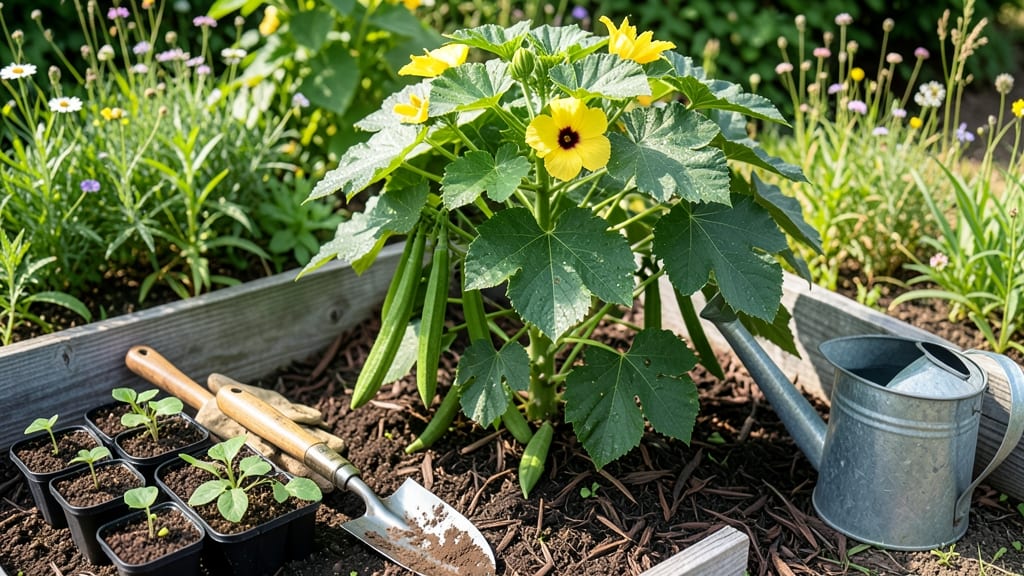
Planting okra in Texas isn’t just about timing—it’s about beating the heat before it beats your plants. If you’ve ever watched your okra 🌱 bolt or wilt under Texas sun, you know the stakes are high.
The key to a thriving harvest lies in understanding your specific heat zone, where even a few weeks can mean the difference between success and failure.
Most Texas gardeners swear by planting okra after the last frost, but that’s only half the battle.
In North Texas (zones 8a-9a), you’ll want to start seeds indoors by March 15 and transplant after April 15, while South Texas (zones 9b-10b) can direct-sow as early as February 15—if you’re brave enough to gamble on the weather.
Here’s the game-changer: okra thrives in 80-90°F soil, so rushing it too early can stunt growth. I’ll break down the exact planting windows for your region, plus pro tips to extend your harvest through Texas’s brutal summers. Ready to turn your okra dreams into a reality?
From soil prep to heat-resistant varieties, we’ll cover everything you need to know to plant okra at the perfect moment—so you’re harvesting pods by June instead of watching them struggle in the heat. Let’s get started.
Texas okra planting zones: heat map by month and region
Texas spans three distinct heat zones for okra cultivation, each with its own last frost dates and ideal planting windows. Understanding these zones is critical—planting too early in North Texas risks frost damage, while South Texas gardeners can start earlier due to warmer soils.
Let’s break down the best months and soil temperature thresholds for each region.
Okra thrives in warm soil temperatures above 60°F (15°C). In Zone 1 (North Texas), wait until mid-April after the last frost (typically around February 15).
For Zone 2 (Central Texas), you can plant as early as late March, while Zone 3 (South Texas) allows for February plantings in some areas.
Here’s how to align your planting with Texas’ heat zones and frost-free periods for maximum yield:
| Zone | Last Frost Date | Ideal Planting Window | Soil Temp Threshold | Notes |
|---|---|---|---|---|
| Zone 1 (North Texas) | Feb 15 | Mid-April to early May | 60°F+ (15°C+) | Wait for stable 60°F+ soils; use row covers if late frost risk. |
| Zone 2 (Central Texas) | Jan 31 | Late March to April | 60°F+ (15°C+) | Direct sow after last frost; succession plant every 2 weeks. |
| Zone 3 (South Texas) | Jan 1 | February to early March | 65°F+ (18°C+) | Can plant earlier; monitor for heat stress in summer. |
For North Texas gardeners, I recommend starting seeds indoors 4-6 weeks before your target transplant date (early April). This gives seedlings a head start before the last frost in February. Use a heat mat to maintain 70-80°F soil temperatures for faster germination.
In Central and South Texas, direct sowing is often easier due to longer frost-free periods. However, if you’re in Zone 3 and planting in February, protect young plants with shade cloth during 100°F+ days to prevent bolting.
Okra bolts (prematurely flowers) when stressed by heat or drought, reducing pod production.
Pro tip: Use a soil thermometer to confirm soil temps before planting. Okra seeds won’t germinate below 60°F (15°C), and waiting for warmer soils ensures stronger starts. In Zone 1, this might mean delaying until late April—better late than sorry!
Remember, okra is a fast grower with a 60-80 day harvest window. Planting in late spring (May-June) can still yield a crop before first frost in most regions. For example, a June planting in North Texas might produce pods by August-September, just before cooler weather arrives.
🌱
Texas okra planting zones: heat map by month and region
Texas stretches across three distinct heat zones for okra planting, each with its own frost dates and soil temperature thresholds. North Texas (zones 8a-9a) has the shortest growing window, while South Texas (zones 9b-10b) enjoys a near-year-round growing season.
The key? Planting when soil hits 60°F+—any earlier, and your okra will languish.
In North Texas, the last frost typically hits February 15, but don’t rush—wait until April 15 to transplant seedlings. South Texas gardeners can direct-sow as early as February 1, thanks to milder winters.
Even in the hottest zones, okra needs time to establish roots before summer’s brutal heat sets in.
🌱 Texas Okra Planting Timeline by Zone
| Zone | Last Frost | Optimal Planting Window | Soil Temp Threshold |
|---|---|---|---|
| 8a-9a (North) | Feb 15 | April 15 - May 15 | 60°F+ |
| 9b (Central) | Jan 15 | March 1 - June 1 | 65°F+ |
| 10a-10b (South) | Dec 15 | Feb 1 - Sept 1 | 70°F+ |
For Central Texas (zone 9b), aim for March 1 as your earliest planting date, but be ready to protect seedlings from late frosts. The Rio Grande Valley (zones 10a-10b) is the most forgiving—you can even plant okra in October for a winter harvest, though yields may be smaller.
Pro tip: Use a soil thermometer to confirm temperatures before planting. Okra roots won’t thrive below 60°F, and waiting a few weeks for ideal conditions can mean the difference between a bountiful harvest and a failed crop.
I’ve seen too many gardeners rush and end up with stunted plants that never produce pods.
Once your okra is in the ground, focus on consistent moisture and mulching to keep roots cool. In North Texas, a late planting by June 1 can still yield pods if you provide afternoon shade during peak summer heat.
The goal? Extend your harvest as long as possible before the first frost hits.
Remember: Okra is a fast grower, but it needs warmth to thrive. If you’re in a cooler microclimate (like the Hill Country), opt for Clemson Spineless—it tolerates temperature swings better than other varieties.
Planting at the right time isn’t just about the calendar; it’s about giving your okra the best shot at survival in Texas’s unpredictable climate. 🌡️