
Plants
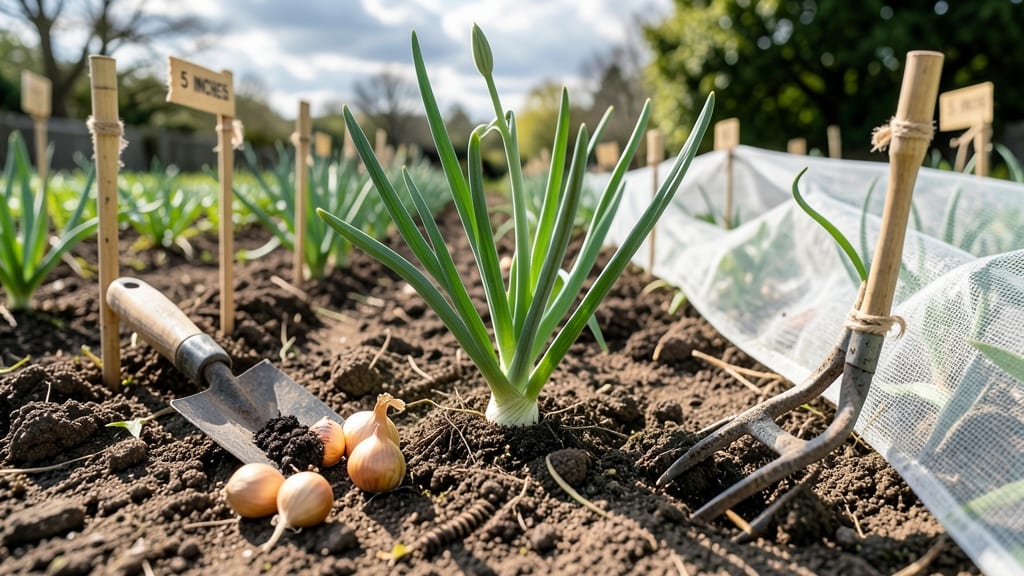
Planting onions in Michigan isn't just about timing—it's about outsmarting unpredictable spring frosts that can turn your hard work into a sad, wilted mess. Whether you're growing sweet 🧅 Spanish or hardy yellow varieties, getting the window right means the difference between a bumper crop and a bust.
Most gardeners in zones 5b-6b swear by early spring plantings, but Michigan's last frost can sneak in as late as mid-April—so don't rush those seeds!
The key is planting sets or transplants 4-6 weeks before your average last frost date, giving them a head start before Mother Nature decides to play her usual tricks.
Here's what you need to know: short-day onions (like Candy) can handle cooler temps, while long-day varieties (Texas Early White) demand warmer soil. We'll break down the exact months for each type, plus how to adjust if your spring decides to stay stubbornly cold.
Ready to grow onions that actually make it to harvest? Let's dive into Michigan's frost-free planting windows and the game-changer strategies that'll keep your crop thriving—no matter what the weather throws at you.
Michigan onion planting calendar: best months by variety type
Michigan’s short growing season and variable frost dates make onion planting a precise science. Unlike many crops, onions require specific daylight hours to form bulbs—so choosing the right variety and timing is critical.
Northern Michigan (USDA zones 4b-5a) has a shorter frost-free window than southern regions (zones 5b-6b), which affects when you can safely plant.
Onions fall into three categories based on daylength requirements: short-day (best for southern U.S.), intermediate-day (adaptable), and long-day (ideal for Michigan). Most Michigan gardeners grow long-day varieties, which need 14-16 hours of daylight to bulb properly—a perfect match for our summer solstice conditions.
Here’s your Michigan-specific planting calendar, broken down by onion type and region. Use this as your guide to avoid frost damage or poor bulb formation.
| Onion Type | Best Planting Months | Northern MI (Zones 4b-5a) | Southern MI (Zones 5b-6b) | Notes |
|---|---|---|---|---|
| Long-Day (Yellow, Red, White) | March–April (sets) or April–May (transplants) | Late April–May (after last frost) | March–April (earlier risk of frost) | Ideal for Michigan; harvest August–October. |
| Intermediate-Day (Sweet Spanish, Candy) | April–May (transplants) or July (fall harvest) | May–June (soil must be 50°F+) | April–May (earlier risk of frost) | Good for green onions or small bulbs. |
| Short-Day (Texas Early White, Everlasting) | July–August (fall harvest next year) | July–early August (overwinter) | July–August (harvest next summer) | Best for overwintering; harvest June–July. |
| Green Onions (Scallions) | March–September (successive plantings) | April–September (harvest in 60 days) | March–October (fast-growing) | Harvest leaves as needed; no bulb needed. |
For spring plantings, start with onion sets (small bulbs) 4–6 weeks before your last frost date. These are hardier than seeds and give you a head start. If you’re sowing seeds, do so indoors 8–10 weeks before transplanting to avoid delays.
Michigan’s late frosts (common until mid-May in the north) can devastate young onion plants. To mitigate this, use black plastic mulch or straw mulch to warm the soil faster. For fall plantings, aim for July–August—these onions will overwinter and produce bulbs the following summer.
Southern Michigan gardeners (like those in Ann Arbor or Detroit) can plant 2–3 weeks earlier than northern regions (e.g., Traverse City or Marquette). Always check your local frost dates—the Michigan State University Extension provides updated forecasts each year.
One common mistake is planting long-day onions too late. If you miss the April–May window, your bulbs may never form properly. For a second harvest, try short-day varieties planted in late summer—these mature the following year.
Remember: Soil temperature matters just as much as air temperature. Onions won’t sprout until the soil reaches 40°F, but they grow best in 60–70°F soil. Use a soil thermometer to confirm readiness before planting.
🌱
How to adjust onion planting for Michigan’s unpredictable spring
Michigan’s spring is famously fickle—one day it’s 60°F and sunny, the next it’s a 28°F frost that can turn your onion seedlings into crispy snacks. The key to success?
Flexibility. If your last frost date slips past mid-April (common in northern Michigan), you’ll need to adjust your planting strategy to avoid losing your crop to late-season cold snaps.
Start by monitoring soil temperatures—onions need soil that’s at least 40°F to germinate. Use a soil thermometer to check before planting sets or seeds. If your soil is still chilly in early April, opt for transplants instead of seeds, as they’ll establish faster and handle cooler temps better.
Another trick? Plant in raised beds or on black plastic mulch to warm the soil faster. These methods can shave off 1-2 weeks of waiting time, giving your onions a head start before Mother Nature decides to throw another frost party.
If frost is forecasted: Cover young plants with frost cloth or row covers at night. Never use plastic sheets—trapped heat can burn your onions! For extra protection, plant onions near tall plants like corn or use cloche tunnels to create a microclimate.
For gardeners in Zone 5b (northern Michigan), consider a backup planting in late May if your first attempt gets nipped by frost. Choose short-day varieties like Candy or Everlasting, which are more cold-tolerant and can handle cooler soils. These varieties also mature faster, giving you a second chance at harvest.
Don’t forget about overwintering onions! Plant sets in late July or August for a fall harvest. These onions will bulb up before winter, then you can dig and store them for spring use.
It’s a low-risk way to ensure you always have onions on hand, no matter how late the spring frost lingers.
Finally, keep an eye on weather forecasts and adjust your planting timeline accordingly. If your local Michigan State University Extension predicts a delayed spring, don’t hesitate to push back your planting date. Onions are forgiving, but frost isn’t—and once it hits, there’s no coming back.
With these strategies, you’ll be well-prepared to handle Michigan’s unpredictable spring and still walk away with a bountiful onion harvest—no matter what the weather throws your way. 🌱