
Plants
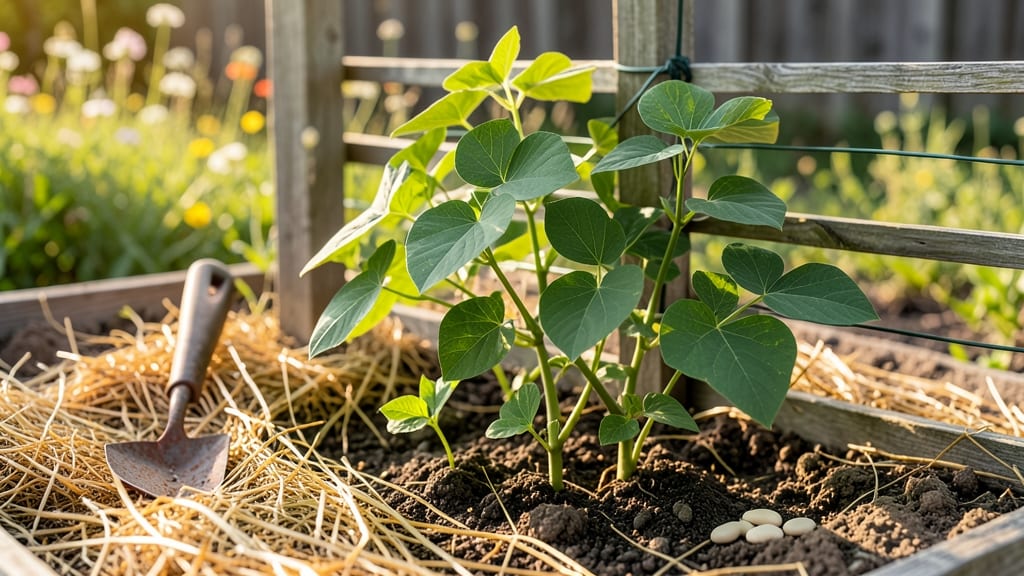
Planting butter beans 🌱 in North Carolina isn’t just about throwing seeds in the dirt—it’s about catching that sweet spot between frost-free warmth and summer’s scorching peak.
Get it wrong, and you’ll either watch your plants wilt in a late frost or struggle with heat stress before they even set pods.
Here’s the truth: Butter beans are warm-season powerhouses, but they need North Carolina’s soil to hit at least 60°F before they’ll even think about sprouting. That means waiting until after your last frost date—whether you’re in the cool mountains (Zone 6b) or the balmy coast (Zone 8a).
I’ve grown these beans across NC’s heat zones, and the difference between a 70-day harvest and a failed crop often comes down to timing.
In this guide, I’ll break down exactly when to plant by county, how to prep your soil, and what to watch for to avoid common mistakes.
Ready to turn your garden into a butter bean bonanza? Let’s dive into the frost-free timeline that’ll have you picking pods from July through October—no guesswork required.
NC butter bean planting timeline by heat Zone (with frost date maps)
North Carolina’s 7 distinct USDA heat zones (5A through 8B) create wildly different planting windows for butter beans. In Zone 5A (mountains like Asheville), you’ll plant after May 15—while Zone 8A (coastal areas like Wilmington) can start as early as March 15.
This variation means your last frost date is the single most critical factor.
Butter beans (Phaseolus vulgaris) are warm-season crops that cannot tolerate frost. Even a light freeze will kill seedlings, so timing your planting to align with your county’s average last frost date is non-negotiable.
For example, Raleigh (Zone 7b) typically sees its last frost around March 15, while Charlotte (Zone 7a) waits until March 20.
Here’s a heat zone breakdown with exact planting windows and frost-free growing periods to maximize your harvest:
| USDA Zone | Last Frost Date | Ideal Planting Window | Frost-Free Days | Notes |
|---|---|---|---|---|
| 5A (Mountains) | May 15 | June 1–June 15 | 140–160 days | Short season; choose fast-maturing varieties. |
| 6A (High Piedmont) | April 15 | April 30–May 15 | 160–180 days | Cool nights; extend season with row covers. |
| 7A (Piedmont) | March 20 | April 15–April 30 | 180–200 days | Classic NC planting zone for butter beans. |
| 7B (Central NC) | March 15 | April 1–April 15 | 200–220 days | Long season; can plant twice (spring + late summer). |
| 8A (Coastal Plain) | February 15 | March 1–March 15 | 220–240 days | Humid climate; prioritize disease-resistant varieties. |
| 8B (Outer Banks) | January 31 | February 15–February 28 | 240+ days | Longest growing season; can plant year-round. |
For cooler zones (5A–6A), consider late summer replanting (August 1–15) to extend your harvest into October. In warmer zones (7B–8B), you can even squeeze in a second planting in early July for a fall crop, provided you use fast-maturing varieties (like ‘Contender’ at 60 days).
Pro tip: Use the NC State Extension’s Frost/Freeze Probability Maps to fine-tune your planting date. For example, Asheville (Zone 6b) has a 20% chance of frost after May 15, so I wait until June 1 to be safe.
Meanwhile, in Wilmington (Zone 8a), I plant by March 1 to avoid summer heat stress.
Soil temperature is just as critical as air temperature. Butter beans won’t germinate well below 60°F, so always check with a soil thermometer before planting. In Zone 7a, I’ve seen seeds rot when planted in 55°F soil—even if the air is warm.
Aim for consistent 65°F+ soil for reliable germination.
If you’re in Zone 5A or 6A, prioritize early-maturing varieties (like ‘Limelight’ at 55 days) to avoid fall frosts. In Zone 8B, you can afford slightly slower varieties (like ‘Fordhook’ at 70 days) because the growing season stretches into November.
Always calculate your first frost date and subtract the variety’s days to maturity to avoid late-season losses.
For container gardening in urban NC areas (like Charlotte or Raleigh), stick to compact varieties (like ‘Mascotte’) and plant 2–3 weeks later than ground planting to account for slower soil warming in pots. Containers also dry out faster, so monitor moisture closely during April–June when evaporation spikes.
🌱
Signs your NC butter bean planting time is perfect (or too early)
Timing your butter bean planting isn’t just about checking a calendar—it’s about reading your garden’s soil, weather, and plant signals. I’ve learned the hard way that even a week too early can mean stunted growth or frost damage, while planting too late risks heat stress before harvest.
Here’s how to know when your garden is truly ready.
First, check your soil temperature—butter beans need the ground to hit at least 60°F before planting. Use a soil thermometer (or press your hand into the soil; if it’s warm like bathwater, you’re good).
Cold soil slows germination, leaving seeds vulnerable to rot. I always test in the morning shade for accuracy.
Perfect planting signs:
- Soil at 60°F+
- Last frost date 3+ weeks past
- Daytime temps consistently above 70°F
- No overnight frosts forecasted
Next, watch your local microclimate. Coastal NC (Zones 8a-8b) can plant as early as mid-March, while the mountains (Zone 6b) should wait until mid-May. Even within the same county, slope orientation matters—south-facing beds warm up faster than north-facing ones.
I once planted too early in the Piedmont and lost half my crop to a surprise frost.
Pay attention to leaf color cues after planting. Healthy butter bean seedlings should unfurl bright green leaves within 7–10 days. If leaves appear yellow or purple, it’s a sign of cold stress or poor drainage.
Purple stems? That’s your plant begging for warmer temps. I’ve saved many a struggling plant by moving it to a warmer microclimate or adding a row cover for a few days.
For late-season planting (August for a fall crop), aim for seeds to mature before the first frost. Butter beans need 70–90 days to harvest, so count backward from your average first frost date.
In Zone 7a, that means planting no later than August 15. Use heat-tolerant varieties like ‘Contender’ if you’re pushing the season.
Finally, avoid these timing traps: planting after heavy rain (soil compacts), ignoring wind patterns (beans hate exposure), or skipping soil prep.
I once rushed planting after tilling wet soil, and my beans struggled for weeks. Amend your soil 2–3 weeks before planting with compost to give roots a head start.
When in doubt, start with a small test batch—plant a few seeds in a protected spot (like a cold frame) to gauge your local conditions. That’s how I perfected my NC planting schedule without losing a single crop to timing mistakes.