
Plants
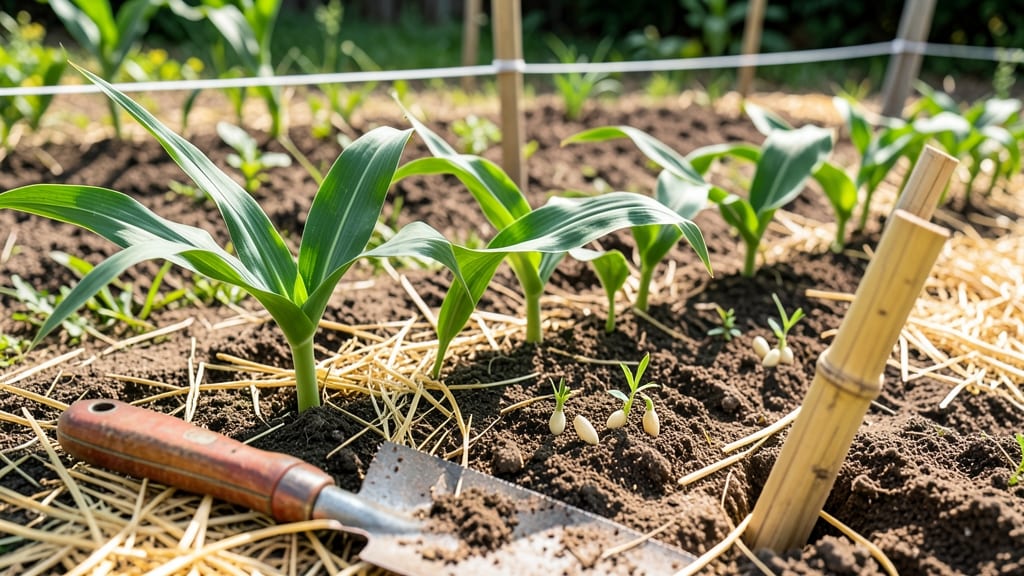
Timing your corn planting in Nebraska wrong could mean the difference between a bountiful harvest and a sad, wilted 🌽 crop—especially when those late spring frosts roll in without warning.
You’ve got just 60 days from planting to harvest for early varieties, and missing the window means slower growth, weaker stalks, or even total crop failure. The key? Planting after the last frost—typically mid-April to late May—but with a backup plan for Nebraska’s unpredictable weather.
I’ll break down the exact frost-free deadlines for sweet, field, and popcorn varieties, plus how to adjust if Mother Nature throws a curveball. No more guessing—just science-backed dates to maximize your yield.
Whether you’re a backyard gardener or a small-scale farmer, these insights will help you avoid common mistakes and get your corn off to the strongest start possible.
Nebraska corn planting dates by variety type (sweet, field, popcorn)
Timing is everything when planting corn in Nebraska, where USDA zones 4-6 and unpredictable frost dates demand precision. I’ve broken down the optimal planting windows for sweet corn, field corn, and popcorn varieties—plus how to adjust for your specific region.
The Panhandle’s earlier springs (Zone 5a) allow planting as early as mid-April, while eastern Nebraska (Zone 6b) may wait until late May.
For all varieties, soil temperature must reach 50°F+ for germination, and last frost dates vary dramatically across the state. Use the Nebraska State Climate Office’s frost prediction tool to pinpoint your local window.
I’ve organized these dates by maturity groups—early (75-90 days), mid (90-105 days), and late (105+ days)—to ensure your corn matures before the first frost in October.
Sweet corn (the most popular choice for home gardens) thrives with 60-75 days to maturity, making it ideal for Nebraska’s short growing season. Plant early varieties like 'Silver Queen' by April 20-May 10 in western regions, or May 10-20 in eastern Nebraska. Mid-season varieties like 'Peaches & Cream' need May 15-June 1 for a late-summer harvest.
Field corn (used for livestock feed or silage) requires 90-120 days and should be planted April 15-May 15 in western Nebraska or May 10-June 1 in the east. Popcorn varieties like 'Golden Bantam' (a dwarf variety) can handle slightly later plantings (May 15-June 5) due to their shorter stature and drought tolerance.
Here’s a quick reference for Nebraska’s frost-free planting windows by variety and region:
| Variety Type | Maturity Group | Western NE (Zones 4-5a) | Central NE (Zones 5b-6a) | Eastern NE (Zone 6b) | Notes |
|---|---|---|---|---|---|
| Sweet Corn | Early (60-75 days) | April 20-May 10 | April 25-May 15 | May 10-May 25 | Plant 'Golden Bantam' or 'Ambrosia' for early harvests. |
| Sweet Corn | Mid (75-90 days) | May 1-May 15 | May 10-May 25 | May 20-June 5 | 'Silver Queen' or 'Peaches & Cream' for peak flavor. |
| Field Corn | Mid (90-105 days) | April 15-May 10 | April 20-May 15 | May 10-May 25 | Use for livestock feed or silage; needs deep soil. |
| Popcorn | Late (105+ days) | May 10-May 25 | May 15-June 1 | June 1-June 10 | 'Golden Bantam' or 'Minnesota White' for drought resistance. |
Pro tip: Plant in blocks (not rows) to ensure even pollination—this is critical for sweet corn, where uneven maturity leads to poor kernel development. For example, plant 4x4 foot blocks of the same variety 1-2 weeks apart to extend your harvest window by 2-3 weeks.
If you’re in eastern Nebraska, where soil stays cooler longer, opt for early-maturing varieties or use black plastic mulch to warm the soil 2-3 weeks faster.
In the Panhandle, where drought is a risk, choose drought-tolerant hybrids like 'Pioneer Brand 39T23' and plant near a drip irrigation system.
One common mistake I see is planting too early when soil is still cold (below 50°F). Corn seeds won’t germinate until soil hits 50°F+, and planting in cold soil leads to rot and poor stands.
Use a soil thermometer to check—wait until the 6-inch depth consistently reads 55°F+.
For southern Nebraska (near Omaha or Lincoln), aim for
How to adjust planting dates for Nebraska’s unpredictable weather patterns
Nebraska’s spring weather is famously fickle—one day it’s 60°F and sunny, the next it’s a 28°F frost that can wipe out tender corn seedlings overnight.
I’ve learned the hard way that rigid planting dates won’t cut it here. Instead, I rely on soil temperature and frost prediction models to stay flexible.
Your best defense is a soil thermometer—corn seeds won’t germinate until the soil hits 50°F, but ideal planting temps are 60°F+. If your thermometer reads below 50°F in early April, wait. Patience here prevents stunted growth and poor yields.
For late springs (which happen 3 out of 5 years in Nebraska), I use the Nebraska State Climate Office’s frost prediction tool. This free resource gives me a 7-day frost forecast so I can adjust planting dates by 1-2 weeks without risking frost damage.
🌱 Pro Tip: Plant early varieties first if frost warnings linger. They mature in 60-75 days, giving you a buffer. Save mid-to-late season varieties for late May when the risk of frost drops below 10%.
🌡️ Late Spring Warning: Don’t Plant Too Early
Planting corn before soil warms to 50°F risks seed rot and poor germination. In Nebraska’s USDA Zone 5-6, late April frosts are common—wait until mid-May if early plantings fail to sprout.
🔹 Solution: Use row covers or black plastic mulch to warm soil faster if you must plant early.
If frost strikes after planting, act fast. Cover seedlings with old blankets or cardboard during the day and remove them when temps rise. For extreme delays, consider starter plants from local nurseries—though they’re pricier, they’ll give you a 2-week head start on the season.
🌾 Key Takeaway: Nebraska corn growers thrive by monitoring soil temps, tracking frost forecasts, and planting in stages. This strategy ensures at least one successful planting window, even in the worst springs.
For backup planning, I keep a second planting date ready—usually 2 weeks after my primary date. This way, if the first batch fails, I’ve got a second chance for a harvest before summer’s end.