
Plants
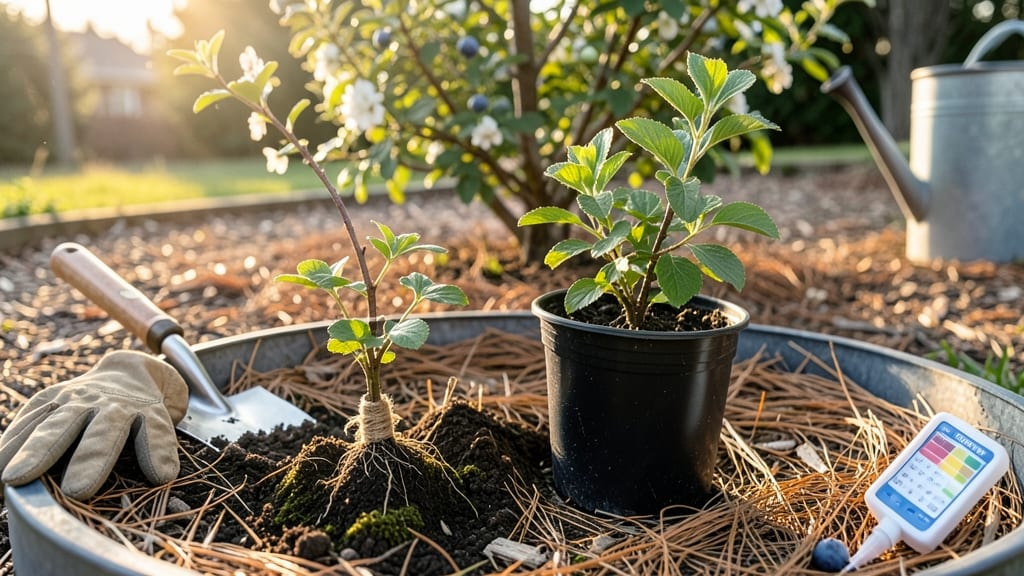
Planting blueberries in Minnesota isn't just about timing—it's about matching the right variety to your Zone 3-4 chill hours to ensure those juicy 🫐 berries thrive.
If you've ever watched your bushes struggle or fail to produce, you're not alone: many gardeners miss the narrow window between last frost and summer heat.
The key is planting between late April and early June, when soil temperatures rise but late frosts have passed. This window gives your bushes time to establish roots before Minnesota's short growing season kicks into high gear.
But here's the catch: some varieties need 450 chill hours, while others demand 900+—and getting that wrong means wasted effort.
I'll walk you through exactly when to plant—whether you're working with bare-root bushes or containers—and how to prep your soil for maximum survival. From Minneapolis to Duluth, these tips will help you avoid common pitfalls and set up your bushes for a July-August harvest.
Ready to turn your backyard into a blueberry powerhouse? Let's dive into the precise schedule that works for Minnesota's climate, so you can enjoy homegrown berries year after year.
Best planting windows for Minnesota blueberries by chill-hour needs
Minnesota’s Zone 3-4 climate demands careful timing for blueberry planting, as these shrubs require 450-1,000 chill hours to thrive. The best windows align with last frost dates (mid-May) and soil workability, but regional differences between Minneapolis, Duluth, and Fargo create nuanced variations.
High-bush varieties (like 'Bluecrop') need 450-900 chill hours, while low-bush types (like 'Patriot') require 600-1,000 chill hours—both perfectly matched to Minnesota’s winters.
Spring planting (late April-early June) is ideal for bare-root bushes, allowing roots to establish before summer heat. Fall planting (September-October) works for container-grown plants, giving roots time to settle before winter dormancy.
However, late fall planting risks frost heave—when soil freezes and lifts roots—so avoid planting after mid-October in most of Minnesota.
Duluth’s cooler microclimate (Zone 3) favors early spring planting (late April) to avoid late frosts, while Fargo’s slightly warmer Zone 4 allows mid-May planting. Minneapolis falls in between, with late April-early May as the sweet spot.
Always check your local USDA frost map—a sudden late frost can devastate young blueberry bushes still adjusting to Minnesota’s 150 frost-free days.
| Planting Window | Best For | Chill Hours | Minnesota Region | Risk Factor |
|---|---|---|---|---|
| Late April | Bare-root high-bush | 450-900 | Duluth, North MN | Late frost risk |
| Early May | Bare-root or container | 600-1,000 | Minneapolis, Twin Cities | Moderate |
| Mid-May | Container-grown | 450-700 | Fargo, Southwest MN | Low |
| September | Container-grown only | All ranges | All regions | Frost heave risk |
For container-grown blueberries, you can push boundaries slightly—planting in March (indoors) or June (outdoors) works for urban gardeners with limited space. Containers warm up faster in spring, giving you a 2-week head start over bare-root planting.
Just ensure containers have drainage holes and use acidic potting mix (pH 4.5-5.5) to mimic Minnesota’s natural bog conditions.
Timing isn’t just about months—it’s about soil temperature. Blueberry roots need soil at 40°F or warmer to establish. In Minnesota, this typically aligns with late April for southern regions and early May for northern areas.
Use a soil thermometer to confirm—planting too early in cold soil can stunt root growth and leave bushes vulnerable to winter dieback.
Pro tip: If you miss the spring window, fall planting in September is your next best option—but only for container-grown plants. Bare-root bushes planted in fall rarely survive Minnesota’s winters unless you mulch heavily (6+ inches) with pine needles or straw.
The key is getting roots established before ground freezes, usually by mid-October.
Regional microclimates matter. Duluth’s cooler summers mean blueberries planted in late April have more time to establish before heat stress, while Fargo’s warmer Zone 4 allows mid-May planting with lower frost risk.
Even within the Twin Cities, urban heat islands can create 2-3°F warmer microclimates—ideal for pushing planting dates 3-5 days earlier in city centers.
Never plant blueberries in frozen ground—this is a common mistake in Minnesota’s Zone 3-4. Test soil moisture and temperature before planting: squeeze a handful—if it
Best planting windows for Minnesota blueberries by chill-hour needs
Minnesota's Zone 3-4 climate creates a tight window for planting blueberries, where timing directly impacts survival and fruit production. The last spring frost typically arrives around mid-May, but soil temperatures must reach 40°F before planting.
For high-bush varieties (450-900 chill hours), aim for late April to early June—this gives roots time to establish before summer heat sets in.
Low-bush varieties (600-1,000 chill hours) can handle slightly later planting, but June is the cutoff to avoid stunted growth. In northern Minnesota (Duluth, International Falls), push planting to late May to dodge late frosts, while southern regions (Minneapolis, Rochester) can plant as early as mid-April for container-grown bushes.
Why timing matters: Planting too early risks frost damage to new shoots, while late planting delays root establishment, leaving bushes vulnerable to winter dieback. Always check your local frost date—Minnesota's can vary by 2-3 weeks yearly.
📅 Minnesota Blueberry Planting Windows by Variety Type
| Variety Type | Chill Hours | Best Planting Window | Risk if Planted Late |
|---|---|---|---|
| High-Bush (e.g., 'Bluecrop') | 450-900 | Late April - Early June | Stunted root growth, winter dieback |
| Low-Bush (e.g., 'Patriot') | 600-1,000 | Early May - Mid-June | Reduced berry yield next season |
| Rabbiteye (e.g., 'Premier') | 300-500 | Mid-April - Late May | Heat stress, poor flowering |
⚠️ Pro Tip: Use container-grown bushes if planting after June 1st—they establish faster than bare-root.
For container-grown blueberries, you have more flexibility: plant as early as March in southern MN (with frost protection) or up to July in containers (though harvest may be delayed). Containers also let you move bushes to sheltered microclimates during harsh winters.
Fall planting is not recommended in Minnesota due to early frost risks. If you must plant in autumn, do so by early September in southern regions, giving roots 6-8 weeks to establish before winter. Mulch heavily with 6+ inches of pine needles to insulate roots.
Always check your local USDA Zone—northern MN (Zone 3) has 100 fewer frost-free days than southern MN (Zone 4). Adjust your planting window by 2-3 weeks later if you're in Zone 3 to avoid spring frosts.