
Plants
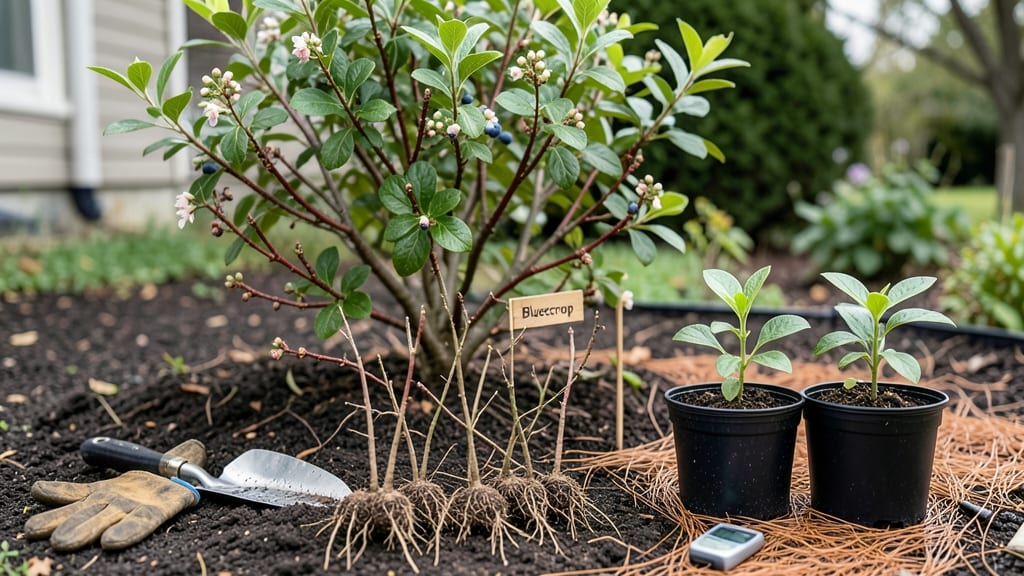
Planting blueberries in Washington State isn’t just about grabbing a 🫐 bush and sticking it in the ground—it’s about outsmarting the climate. Whether you’re in chilly Zone 5b or milder Zone 8b, timing matters more than you’d think, because one wrong move could mean waiting years for your first harvest.
Fall planting is your best bet for most of Washington, but the exact window depends on where you live. In Western WA’s Zone 8b, you’ve got until late October, while Eastern WA’s cooler zones need to get them in by early October.
Get it wrong, and frost can turn your new bushes into sad, frozen sticks before they even take root.
I’ve learned the hard way that blueberries thrive when planted 4-6 weeks before the first frost, but not so early that the soil’s still too warm. The key is balancing chill hours (those cold winter nights they need to set fruit) with frost-free deadlines.
Let me show you exactly how to nail this timing for your specific corner of Washington.
From soil prep to variety selection, I’ll walk you through every step to ensure your blueberries grow strong, fruit early, and give you those sweet, juicy berries you’ve been dreaming of. Ready to get started?
Best planting months for Washington blueberry Zones (5-8) based on chill hours
Washington State spans USDA Zones 5b to 8b, creating dramatic differences in chill hours and frost risks. In Zone 5b (e.g., Spokane), you need 800-1000 chill hours for Northern Highbush varieties, while Zone 8b (e.g., Seattle) thrives with 400-600 chill hours for Southern Highbush types.
The key? Planting when soil temps hit 40°F (4°C) but before late frosts return in fall.
For most of Washington, September through October is ideal for bare-root planting because the ground stays warm enough for root establishment, yet cool enough to avoid heat stress. In Zone 5b, aim for late September—after the first frost risk passes but before soil cools too much.
In Zone 8b, stretch your window to October since milder winters delay frost.
Spring planting (March-April) works too, but young bushes struggle with late frosts if planted too early. Northern Highbush varieties (like ‘Duke’ or ‘Legacy’) need 600+ chill hours, so they’re best in Zones 5b-7a. Southern Highbush (like ‘Top Hat’) thrive in Zones 7b-8b with fewer chill hours.
Matching your variety to your zone’s chill hours doubles your chances of fruiting in 2-3 years.
📊 Washington Blueberry Planting Guide by Zone
| USDA Zone | Chill Hours Needed | Best Planting Window | Recommended Varieties | Frost Risk Period |
|---|---|---|---|---|
| 5b (Spokane, Wenatchee) | 800-1000 | Late Sept - Early Oct | Duke, Legacy, Bluecrop | Oct 15 - Nov 15 |
| 6a (Pullman, Moses Lake) | 600-800 | Early Sept - Mid Oct | Jersey, Patriot, Aurora | Oct 1 - Nov 10 |
| 7a (Yakima, Wenatchee) | 400-600 | Mid Sept - Late Oct | Top Hat, Sunshine Blue, Centurion | Oct 10 - Nov 5 |
| 8b (Seattle, Bellingham) | 200-400 | Late Sept - Nov 1 | O’Neal, Sharpblue, Pink Lemonade | Nov 1 - Dec 1 |
💡 Pro Tip: Use acid-loving soil amendments (pH 4.5-5.5) to boost root growth during planting.
If you’re in Western Washington (e.g., Seattle, Bellingham), your last frost date is often November 1, giving you a longer fall window. But Eastern Washington (e.g., Spokane, Wenatchee) can see frost by October 15, so plant bare-root bushes by mid-September to avoid winter damage.
Always check your local frost dates via the USDA Plant Hardiness Map or your county extension office.
For container planting, you can extend your window slightly—just ensure pots stay above freezing with mulch or row covers. Dwarf varieties like ‘Top Hat’ adapt better to containers, making them ideal for Zone 8b gardeners with limited space.
Remember: Soil temperature matters more than air temperature—use a soil thermometer to confirm it’s 40°F (4°C) before planting.
One common mistake? Planting too late in fall when roots can’t establish before winter. If you miss your zone’s window, spring planting (March-April) is your backup—just water deeply and use mulch to protect roots from spring frosts.
In Zone 5b, spring planting is riskier due to late frosts, so fall is always better.
Finally, microclimates play a huge role in Washington. A south-facing slope in Zone 6a might stay frost-free 2 weeks longer than a valley. Use this to your advantage by planting slightly later in sheltered spots.
And if you’re unsure? Plant in containers—they’re portable and let you move bushes to warmer microclimates if needed
Critical deadlines: when to plant to avoid frost damage in WA’s rainy season
Washington State’s cool, wet climate creates tight planting windows for blueberries. Miss the deadline, and your young bushes face frost damage or stunted growth. The key is knowing your last frost date—which varies wildly from Zone 5b in Northeast WA to Zone 8b near the coast.
For most of Washington, the ideal planting window closes by mid-October in Western WA and mid-November in Eastern WA. But don’t wait until the last minute—soil must be above 40°F (4°C) for roots to establish before winter dormancy sets in.
🚨Callout Warning🚨
- Frost burn: New roots can’t handle temps below 20°F (-7°C).
- Poor root establishment: Bushes may take 2+ extra years to fruit.
- Disease vulnerability: Wet WA winters invite root rot in soggy soil.
Your microclimate matters. Coastal areas like Olympia (Zone 8b) can plant until November 15, while inland spots like Pullman (Zone 5b) must finish by October 1. Check your local frost-free date (try the Almanac’s Frost Calculator) and subtract 4-6 weeks for safe planting.
For bare-root plants, aim to plant 6-8 weeks before first frost. Container-grown bushes give you 2 extra weeks of flexibility since their roots are less vulnerable. But even then, avoid planting when rainfall exceeds 2 inches/week—soil becomes too saturated for root growth.
Extend your window with these tricks:
- Choose a south-facing slope to delay frost by 1-2 weeks.
- Add 3-4 inches of mulch to insulate roots (use pine needles for acidity).
- Plant near a sunny wall to absorb daytime heat and radiate it overnight.
If you’re in Zone 6-7 (e.g., Spokane or Yakima), consider late winter planting (February-March) instead. The soil warms faster, and you avoid WA’s relentless October rains. Just be ready to water deeply if spring drought hits.
🌱Remember: A well-timed planting in Washington means faster fruiting and healthier bushes that handle the region’s wet winters like pros. Don’t gamble—check your zone, mark your calendar, and plant before the rainy season locks you out.