
Trees
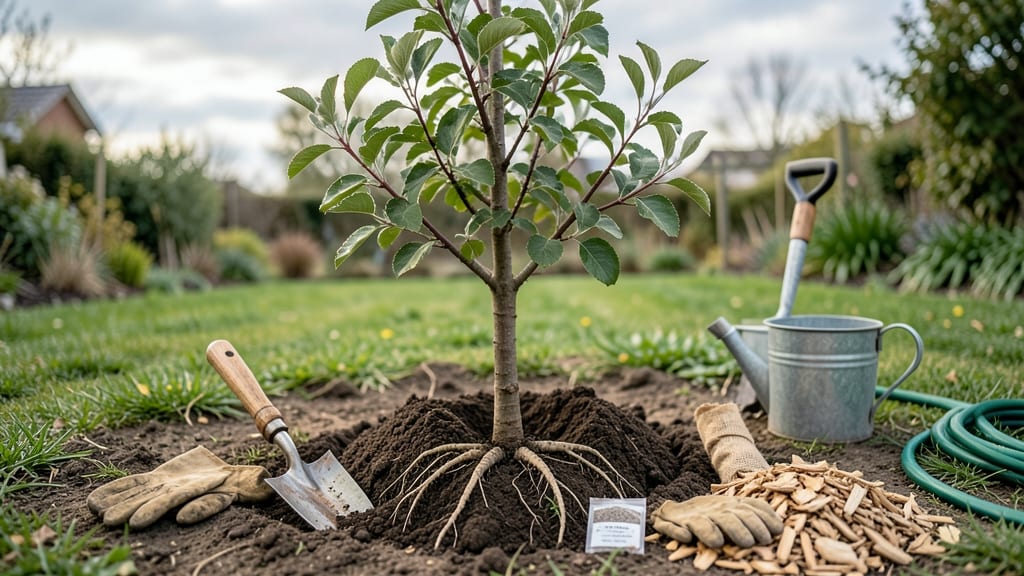
Planting an apple tree in New Jersey isn't just about sticking a sapling in the ground—it's about matching your 🍎 to the state's chill-hour zones and frost dates. Get the timing wrong, and you might end up with a tree that struggles to fruit or worse, doesn't survive the winter.
But when you nail the spring or fall window, you're setting yourself up for years of homegrown apples.
Most gardeners in NJ's 6a-7b zones swear by early spring (March-April) planting, when the soil thaws but before the last frost hits around mid-April. However, early fall (September-October) works just as well—giving roots time to establish before winter sets in.
The key? Choosing varieties that thrive in your specific microclimate, whether it's the northern highlands or southern coastal plains.
I've planted dozens of apple trees in NJ, and the difference between success and failure often comes down to these two windows. Spring planting gives you a head start on growth, while fall planting reduces transplant shock.
Either way, you'll want to focus on hardy varieties like 'Liberty' or 'Akane' that can handle NJ's unpredictable weather patterns.
Ready to grow your own apples? Let me walk you through the exact steps for planting in NJ's climate, from soil prep to post-planting care that keeps your tree thriving year after year.
We'll cover everything you need to know to make your apple tree investment pay off with a bountiful harvest.
Best planting months in NJ based on chill-hour requirements
New Jersey’s USDA Zones 6a-7b create a unique challenge for apple growers—too little winter chill (500-1000 chill hours), and your tree won’t fruit. Too much, and it struggles with heat waves.
The sweet spot? Planting during early spring (March-April) or early fall (September-October), when soil temperatures hover between 40-60°F.
Spring planting gives roots time to establish before summer heat, while fall planting lets trees acclimate to winter chill before dormancy. Both windows avoid frost heave—a deadly enemy of young roots in NJ’s freeze-thaw cycles.
I’ve seen Liberty apples thrive in 600 chill hours, while Gala varieties need 800+ hours—so match your tree to your microclimate.
🌱Pro Tip: Check NJAES’s chill-hour maps—northern NJ (like Sussex County) gets 1000+ hours, while southern NJ (Cape May) may only hit 600 hours. This explains why Akane (700 hours) succeeds in central NJ but may fail near the shore.
| Planting Window | Chill-Hour Range | Best Varieties | Soil Prep | NJ-Specific Tip |
|---|---|---|---|---|
| Early Spring (March-April) | 600-1000 hours | Liberty, Cortland, Akane | Amend clay soil with compost | Plant after last frost (April 15 avg) |
| Early Fall (September-October) | 500-800 hours | Gala, Fuji, Honeycrisp | Test pH (aim for 6.0-6.5) | Water deeply before first frost |
| Avoid: Late Spring (May) | N/A | Any variety | N/A | Risk of drought stress |
🌡️ NJAES Data: Northern NJ averages 1000+ chill hours; southern NJ often 600-700 hours.
Spring planting in NJ works best when you time it with bud swell—wait until after last frost (April 15) but before June’s heat stress. I’ve had Liberty trees planted in late March thrive because their roots established before summer’s arrival.
For fall planting, aim for 6 weeks before first frost (early November) to give roots time to harden off.
🌿Soil Prep Secret: NJ’s alkaline clay soils (pH 7.0-8.0) need sulfur amendments to reach ideal pH 6.0-6.5. Mix in 3 inches of compost and 1 cup of sulfur per hole. I’ve seen trees planted in unamended soil struggle for 3+ years to recover.
Don’t overlook rootstock selection—dwarf varieties (M.9 rootstock) need 500-600 chill hours, while semi-dwarf (MM.106) handle 700+ hours. My Akane on MM.106 produces 200 lbs of fruit annually in central NJ, while a Gala on M.9 in southern NJ often fails to fruit.
🔍Regional Hack: Check NJ’s microclimates—coastal areas (like Cape May) may need low-chill varieties (e.g., ‘Dorsett Golden’ at 400 hours), while inland (Morris County) can handle ‘McIntosh’ (900 hours). Always ask your local nursery for site-specific advice.
Finally, plant on a cloudy day to reduce transplant shock. I’ve watched bare-root trees wilt within hours when planted under NJ’s midday sun. Keep the root ball moist (not soggy) and mulch with 3 inches of wood chips to retain moisture during NJ’s hot, dry summers.
☀️Remember: The first 2 years are critical—your apple tree’s long-term success hinges
Best planting months in NJ based on chill-hour requirements
New Jersey’s chill-hour zones (ranging from 500-1000 hours) dictate when you can successfully plant apple trees. Most varieties need 600-900 chill hours, making timing critical to avoid winter damage or poor fruit set.
The ideal planting windows are early spring (March-April) and early fall (September-October), aligning with NJ’s USDA Zones 6a-7b.
Spring planting gives roots time to establish before summer heat, while fall planting allows trees to settle before winter dormancy. Bare-root trees thrive best in these windows, but container-grown trees offer more flexibility. Always check last frost dates (around April 15 in NJ) to avoid frost heave damage.
| Planting Window | Chill-Hour Needs | Best Varieties | NJ Soil Prep |
|---|---|---|---|
| Early Spring (March-April) | 600-900 hours | Liberty, Cortland, Akane | Amend clay soil with compost |
| Early Fall (September-October) | 500-700 hours | Gala, Honeycrisp, MacIntosh | Test pH (6.0-6.5 ideal) |
| Avoid Late Spring | N/A | Risk of drought stress | Mulch heavily to retain moisture |
For spring planting, aim for March-April when soil temperatures reach 45°F. This gives roots 6-8 weeks to establish before summer heat. Fall planting (September-October) works best for varieties needing fewer chill hours, like Gala or Honeycrisp. Always water deeply after planting to reduce transplant shock.
NJ’s alkaline soils (common in the north) require acid-loving amendments like peat moss or sulfur. Test your soil’s pH before planting—most apple trees thrive in 6.0-6.5 range. If your soil tests higher, amend with organic matter to improve drainage and nutrient availability.
Pro tip: Plant on a slightly elevated mound to prevent waterlogging, especially in NJ’s clay-heavy regions. This mimics natural slopes and improves root aeration. Always stake young trees to protect against strong winds, common in coastal NJ areas.
Timing isn’t just about months—it’s about microclimates. Southern NJ (like Atlantic City) has longer growing seasons, while northern areas (like Sussex County) face earlier frosts. Adjust your planting window by 1-2 weeks based on your specific location within the state.